Friday, 4 February 2022

My special Gir National Park Experience

 I really can’t place my finger on one specific thing that made my visit to Gir Birding Lodge special. Maybe it was the memorable and informative birdwatching trails with Amitji, or maybe the delicious food cooked by Yakub Bhai that was so well-made that one could taste the love in them. Maybe it was the safaris we took in the wildlife-rich national park, or maybe just a combination of all these.


Gir Birding Lodge itself holds some beautiful natural energy. Sharing a common wall with the interiors of the national park, wildlife is plenty here. Not only can you do some amazing birdwatching within the grounds of the lodge itself, but we even had sightings of Spotted Deer and a Sambar stag in the mango orchards.


The best part of this lodge is their commitment to respecting and giving back to nature. No TV in the rooms means you can enjoy the sounds of nature, from birdsong throughout the day, to the occasional calls of deer at night. In addition, during a casual yet informative chat with the manager Ms. Alem, I learnt that they are involved in other eco-friendly projects, such as some small-scale organic farming, composting, and more, and they are also spearheading a movement to make tourism in Gir as a whole more sustainable. 


I also got to learn about the amazing tribal culture of Sasan Gir from her and Mr. Ramesh. I learnt about the Maldaris, who are a nomadic pastoral people, many of whom still live deep inside the park with no electricity, coexisting with the wildlife of Gir. I learnt about the Siddis, a tribal people of African descent, whose ancestors were brought to Junagadh centuries ago as mercenaries and workers. The lodge was even kind enough to organize a Siddi tribal dance program for those of us inside the lodge, accompanied by a bonfire (truly welcome in the chilly winter), and a barbecue dinner.


While most would say my stay here was of a normal length, I think anyone would find their stay here too short. Time seems to lose all meaning here, and with a variety of activities on offer, wildlife to explore, both inside and outside the park, and so much culture and history to learn about, there is loads of stuff for anyone in Gir.


Monday, 17 January 2022

Amazing Wildlife of the Emerald Isle


The emerald isle of Sri Lanka is a treasure trove of wildlife. Lying in the Western Ghats-Sri Lanka biodiversity hotspot, the island nation is home to many endemic bird and mammal species, as well as the world’s best whale-watching destinations.


Sinharaja Forest Reserve is of international significance and has been designated a Biosphere Reserve and World Heritage Site by UNESCO. The reserve is a treasure trove of endemic species, including trees, insects, amphibians, reptiles, birds, and mammals. The place is especially an attraction for birdwatchers, who visit to admire the many species of birds in Sinharaja, many of which are endemic to Sri Lanka, including Sri Lanka Blue Magpie, Sri Lanka White-eye, Serendib Scops Owl, and many more.


Mirissa is a small town on the south coast of Sri Lanka. It is the largest fishing port on the south coast and is known for its tuna, mullet, snapper and butterfish. During winter and summer, Blue and Sperm Whales cross the southern tip of the island, migrating to the warmer waters of Southeast Asia. Many Blue Whales can be seen at Dondra point in Sri Lanka, accessed through the Mirissa or Weligama harbour. Whale-watching tours can be arranged in Sri Lanka. Blue Whales and some types of dolphins can often be seen in the waters off Mirissa. 


Negombo is a major city in Sri Lanka, situated on the west coast and at the mouth of the Negombo Lagoon, in the Western Province of Sri Lanka. Negombo Lagoon is a large, semi-enclosed, coastal water body with plenty of natural resources. The lagoon is fed by a number of small rivers and a Dutch canal. It is linked to the Indian Ocean by a narrow channel to the north, near Negombo city. Apart from supporting local agriculture and forestry, it has extensive mangrove swamps and attracts a wide variety of water birds.


Friday, 7 January 2022

Snow Leopard Tours

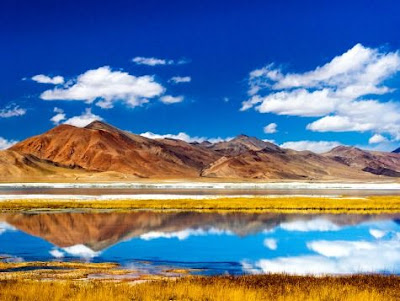
 Ladakh is truly a stunningly beautiful country, one that has beauty in its rugged and almost bare landscape. Not only are the landscapes and views beautiful here, but the people are too. Friendly locals, who are not only super helpful, but also a joy to chat with, colourful traditions, and, of course, yummy Ladakhi food!


The stunning scenery and amazing monuments are accompanied by a fantastic diversity of wildlife, much of which is not found in the rest of the subcontinent. The high altitude and desert-like conditions mean that much of the wildlife here is specialised, even if not endemic.


Among the rugged mountain landscapes of Ladakh, lives possibly the most elusive of the big cats: the Snow Leopard. As pioneers of this trip, it is specially designed and tweaked over 15 years to give you the optimum chance of spotting one of these beautiful creatures. While most only get to see pugmarks of this almost-mythical animal, our trained guides and local trackers always ensure a glimpse of this magnificent predator in its natural habitat, as well as enjoy the other unique wildlife that this high-altitude habitat has to offer. The locals of the area are our support system and one gets enthralling insights into local folklore, as well as learn about their customs and traditions.


Hemis National Park is a high altitude national park in eastern Ladakh. It is globally famous for Snow Leopards, and has the highest density of these predators in the world.  It is the only national park in India that is north of the Himalayas, and is the largest notified protected area in India. The park is home to a viable breeding population of about 200 snow leopards, especially in the Rumbak Valley area. Hemis is the only refuge in India containing the Urial, and is also home to other Tibetan species, including Tibetan Wolf, Red Fox, Himalayan Marmot, and more.


A Birdwatching Journey Through Nepal

 Home to Mount Everest, Nepal also boasts of stunning natural beauty, with an enviable wildlife and cultural experiences making it a very attractive destination for tourists with varied interests.


Starting the tour at Kathmandu, we visit the old area with its stone-paved lanes, ancient temples and the colourful bazaars with curio shops and shops selling shawls, carpet, trekking equipment. Tourist attractions include Swayambhunath Stupa, which is a 2500 years old Buddhist Stupa located at a top of a green hillock with the eyes of Buddha painted on its pinnacle overlooking righteous behaviour of the valley inhabitants. 


Phulchowki is the highest hill among others surrounding the Kathmandu valley. 18 km southeast of the valley, it offers great views, and is a popular hiking destination. The forests of Phulchowki are a popular birding destination. The Royal Botanical Garden at Godavari, at the foot of the hill, is home to more than 100 species of birds, including Spiny Babbler, Tibetan Siskin, and more.


Koshi Tappu Wildlife Reserve comprises extensive mudflats, reed beds, and freshwater marshes in the floodplain of the Sapta Kosi River, in the eastern Terai. Together with the Koshi Barrage, it is designated as an Important Bird Area. The riverine habitat is home to a large variety of wetland birds.


Away from the hustle bustle of the city, we drive to the Chitwan National Park next. A six-hour drive through mountain roads, tiny villages, hamlets and naturally scenic vistas make the drive very interesting. A larger number of bird species (over 480) has been recorded here than in any other part of Nepal due to Chitwan’s diverse habitats and tropical lowland situation. We can expect to see a third of these during our two-night stay. 


The park holds a similar wealth of mammals, including the endangered Indian Rhinoceros, Wild Boar, Sambar, Muntjac, Spotted and Hog Deer, and Rhesus and Common Langur Monkeys. Tigers, Leopards, Sloth Bears, and Gaur (the Asiatic bison) may also occasionally be seen, as well as the Marsh Mugger and fish-eating Gharial Crocodiles. We will explore the park on foot, on elephant back, in canoes and by jeep. At Chitwan, we can also spend time indulging in various other activities including village walks, cultural programs and the most popular visit to elephant breeding centre. We can arrange for you to visit Tharu villages and have a glimpse of Tharu culture too.


Covering an area of 968 sq km, Bardia National Park is the largest and most undisturbed national park in Nepal's Terai. The wide range of vegetation types, including forest, riverine, and grassland patches, provides excellent habitat for more than 50 types of mammal, and more than 400 species of birds.


Tuesday, 21 December 2021

Andaman Birding


The Andamans bring to mind beautiful landscapes with clear waters, sandy shores and beautiful sunsets, or even exploring the mysterious world under the sea – an ideal summer getaway to destress from your everyday life.


It’s no surprise then that this is a place I have long wanted to visit. Egged on by movies depicting beautiful beaches, and water sports, I knew this would be the perfect place to kick back and relax before getting back to work.


While many here would go for the usual beach visits, scuba diving, snorkeling, etc, I wanted to do something a little different than the usual Andaman tour package for family. As a birder, I knew that bird watching in the Andamans would be amazing, with so many endemic species, so my itinerary was more or less decided.


I spent the entire week based more or less in Port Blair itself. Even birding tours in Port Blair can be highly enjoyable, with the amazing Mount Harriet National Park, Sippighat Swamp, Wandoor, and, of course, Chidiya Tapu. The birds here were so amazing that many times I didn’t even bother lifting up my camera, and just spent time watching them. From Andaman Teal and Andaman Green Pigeons, to the shy Andaman Crake, and of course, the variety of owls here! My week was simply stunning.


I won’t lie to you. My week here wasn’t all offbeat birding. I did a fair amount of touristy things. Scuba diving has long been something I wanted to try and thanks to this trip I got to do that too. And who can resist those pristine beaches! After a day full of birding, it was nice to kick back and watch a beautiful seaside sunset.


I didn’t even realize how quickly the week passed, and before you know it, it was time to go back home. Needless to say, my mind and heart would be back in the islands as I spent my days in office.


Friday, 3 December 2021

Amazing Birds and Mammals of Western Ghats


The Western Ghats range of southwest India is naturally abundant with wildlife, and is a paradise for birdwatchers, nature lovers, and photographers alike. Apart from many large mammals, including Gaur, Asiatic Elephant, Tigers, and more, the region is best known among birdwatchers for the 37 South Indian endemics, plus many birds shared with Sri Lanka, such as Malabar Whistling Thrush, White-bellied Treepie, Malabar Barbet, and many more birds with Malabar and Nilgiri in their names! This tour gives you the opportunity to explore Masinagudi, 


part of the Mudumalai National Park, as well as the popular hill station of Ooty, which few know is a birdwatching hub. Mudumalai National Park is located in southern India in the state of Tamil Nadu, although its boundaries border the states of Karnataka and Kerala as well.


 Located amidst the Nilgiri foothills, Mudumalai is home to a variety of birds and mammals. Adjoined by Wayanad Wildlife Sanctuary and Bandipur National Park, Mudumalai has a fascinating topography that showcases a combination of valleys, plains, hills, swampland, and ravines.


Officially known as Udagamandalam, Ooty is a popular hill station in the Nilgiri Hills, often referred to as the “Queen of the Hills” by locals. There are a variety of tourist attractions here, including a “toy train”, many gardens and parks, historical buildings, and a tea factory. However, if you move away from the crowds, you find that the surrounding woods are a great place to go birding. Despite much of Ooty being “developed”, the birdlife here can still surprise you, with many endemic species and a host of migrants joining them in the winter.

Thursday, 2 December 2021

Vibrant Garhwal

 The Garhwal Himalayas of Uttarakhand denotes mainly the westernmost region of the state of Uttarakhand. In ancient times, this rugged mountain region was home to many forts, or ‘garhs’ which were then conquered and united to create the Kingdom of Garhwal. Apart from a rich history, this region is also home to a wide variety of flora and fauna, and some of the most famous birdwatching destinations of Uttarakhand.


Rishikesh is situated at the foothills of Garhwal Himalayan Range and offers fantastic views of hills covered with jungles. The Ganges river is visible (which runs at a speedy pace) from many places and the banks are full of ashrams. These ashrams have their roots in history and are popular worldwide for practicing yoga and meditation. 


It is said that in the Vedic age, many sages were attracted to Rishikesh as the calm surroundings of this place were best-suited for practicing yoga and meditation. This is why today Rishikesh is an abode for many sanyasis and sage. The place has popular spots like Laxman Jhula, which is believed to be built at a place where Laxman once crossed the holy river Ganges using a jute rope. 


Other than this, the place has various temples which have interesting religious back-stories. For the adventure lovers, the place offers water and mountainous sports like river rafting, skiing, trekking, hiking etc.


Historically, Dehradun was a part of the Garhwal Kingdom, and was also known as 'Kedarkhand'. It was founded by Ajai Pal, around 1400. The history of Dehradun is also linked to the story of the Ramayana and Mahabharata. It is believed that after the battle between Ravana and Lord Rama, Lord Rama and his brother Lakshman visited this site. Evidences such as ancient temples and idols have been found in the areas surrounding Dehradun which have been linked to the mythology of Ramayana and Mahabharata. The city was also an important site during the colonial British Raj, home to several military establishments even today.


Mussoorie lies about 30 km from Dehradun. This hill station, situated in the foothills of the Himalaya ranges, is also known as the Queen of the Hills, Being at an average altitude of 2,000m (6,600 ft), Mussoorie, with its green hills and varied flora and fauna, is a fascinating hill resort. Commanding snow ranges to the north-east and glittering views of the Doon Valley and Shiwalik ranges in the south, the town was once said to present a 'fairyland' atmosphere to tourists.