Showing posts with label bird watching south india. Show all posts

Friday, 7 February 2020

Rare and Most Beautiful Wildlife Species to Look for in Western Ghats

Located along the Sahyadri ranges on the west of India and separating the Deccan plateau from the Arabian Sea, the Western Ghats are a stunning range of hills, which have thousands of wildlife species, along with 325 species which are globally endangered.  

The fauna here includes over 139 reptiles, mammals, and amphibian species, 102 fish species, annelids, mollusks, 508 species of birds like Malabar Parakeet and Malabar Grey Hornbills, and over 6000 insect species.


The hills and national parks in the Western Ghats are major corridors for wildlife like Indian Elephants, big cats, Wild Boar and Gaur, and Sloth Bears. The Western Ghats also house unique species like Indian giant squirrel, flying fox, and Nilgiri Tahr. The Western Ghats have recently been declared as UNESCO World Heritage Sites.


Mammals
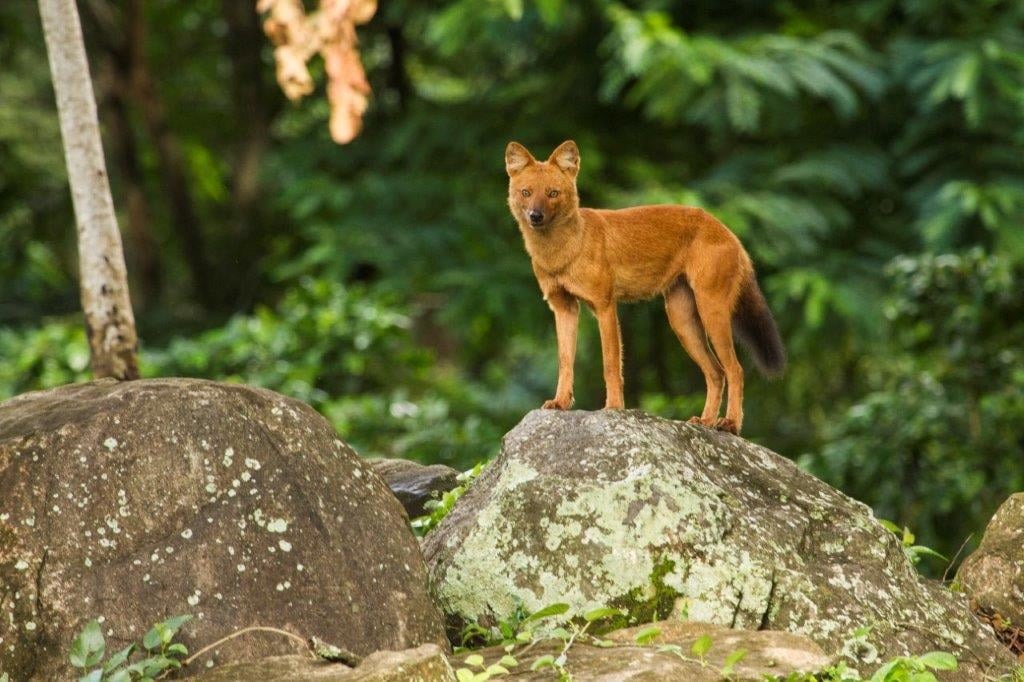
You can find lots of rare and amazing and significant rare species, such as Bengal Tigers and leopards (including black panthers). Large spotted civet and lion-tailed macaque are some of the endangered mammals in Western Ghats. The Asian elephants call the biosphere of Nilgiri their home.


Birds
This biodiversity landmark also houses over 508 bird species. Some of the endemic birds in Western Ghats are Nilgiri wood pigeon, Malabar parakeet, Malabar grey hornbill, Nilgiri flycatcher, grey-headed bulbul, and various birds of prey.


Reptiles
Western Ghats have a huge and diverse range of reptile species, including Vipers, which are some of the most dangerous snakes in the world. You can spot over 13 species of lizard, including dwarf gecko, monitor lizard, and Malabar flying lizard. Western Ghats are also the home to King Cobra, the biggest venomous snake in the world. This snake lives and preys in the rain forests of Western Ghats.

Amphibians
The Western Ghats are also rich in the diversity of amphibians. It has over 80% of the total 179 species of amphibians in the world, including Malabar flying frog and rare purple frog. Also called as pig nose frog, the rare purple frog is known as a living fossil. You can find unique and diverse species of frog in these rainforests.

Fish
Western Ghats are the origin of several streams and rivers. So, you can spot a huge variety of fish species. Its exotic water bodies have over 218 freshwater fish species. It houses a lot of bright fishes like puffer, barb, and catfish. Krishna, Godavari and Kaveri are the three major rivers of Western Ghats. A lot of fish species inhabit the magnificent lakes and waterfalls here.

Insects
Western Ghats are the global hotspot for over 43 bug species and 334 butterfly species. The tropical greens have a lot of day-flying insects and aquatic night flyers. Western Ghats have over 6000 species of insects in Nilgiri biosphere reserves.

Phone: +918010450000
Email: info@asianadventures.in
https://linktr.ee/aatoursandlodges

Don’t miss joining our ‘conservation-travel’ community! Click Here

Wednesday, 10 July 2019

South India Birding Tour


Laced by the sky-kissing coconut trees and wedged by the lush green forests of the Eastern and Western Ghats, South India is a mini world in itself offering a stark contrast to the snow-clad mountains and endless stretches of plains meeting the horizon of North India. Comprising of four states and two union territories including Karnataka, Kerala, Tamil Nadu, Lakshadweep, and Pondicherry, the southern part of India is a region of diverse language, culture, traditions, and gastronomy thriving there for centuries. South India is not only limited to its unique heritage, the land of ancient temples are enveloped with several untouched spots. While many take their time off to cruise through its breathtaking landscapes some seize this opportunity to unfurl its thick foliage that has been home to various shy and beautiful species. Tropical Dry Forests, South Deccan Plateau Dry Deciduous Forest, Scrubland Deccan Thorn Scrub Forest, are the forest types you will be exposed to as you start unwind its dense thickets. Tropical Climate is a dominant feature in South India- not only does it play a significant role in preserving the green luster in the jungle, but it is also responsible for creating an ideal atmosphere for birds and mammals, and reptiles to flourish. Below are the wilderness destinations of South India birding tours destinations enlisted by wildlife experts and knowledgeable naturalists who have spent a considerable amount of time in this province of India.


Vedanthangal Bird Sanctuary


Covering an area of 74 acres, Vedanthangal is one of India's oldest bird sanctuary located in the Kancheepuram district of Tamil Nadu. The place was an erstwhile hunting ground for the royals before it turned into a sprawling kingdom of birds. With more than forty thousand species harboring in its vast precinct, the sanctuary gives you a feast of diverse avian life. Spot-billed Pelican, Great Cormorant, Painted Stork, Eurasian Spoonbills, Black-headed Ibis, Indian Cormorant, Asian Open Bill, Great Egrets, Grey Heron, Purple Heron, White Ibis, Brahminy Kite, Short -Toed Eagle, Black Winged Kite, Pariah Kite, Common Teal, Sabchick, Black-winged Stilt, Little Stilt, Red Shank, Sand Piper, Ringed Plover are just a few names that can be easily spotted over here.


 Top Slip National Park

Also popular by the name of Anamalai Wildlife Sanctuary, Top Slip National Park is a protected forest zone ringed around the verdant mountains of Anamalai. Embellished with Grass Hills, dense groves, waterfalls, teak woods, dams and reservoirs, the sanctuary is home to more than 250 bird species and 3000 plus butterflies, besides sheltering the gorgeous winged species, the place is also the last surviving ground for the vulnerable Nilgiri Langurs, Nilgiri tahr, Manis, and Muntjac. Birding Enthusiasts and Nature Lovers often visit this place to flex their fingers in Wildlife Photography.


often visit this place to flex their fingers in Wildlife Photography.

Nagarhole

Paving the way to the dense groves of Karnataka will lead you to Nagarhole- one of India's finest national parks forming an important forested area when combined with Wayanad Wildlife Sanctuary, Bandipur and Mudumalai National Park. Like Vedanthangal Bird Sanctuary, Nagarhole National Park used to be a hunting ground for the kings of the Wodeyar dynasty. Navigating through the forest will make you cross paths with flagship species of India including Bengal Tigers, Rosetted Leopards, Black Leopards, Sloth Bear, Gaur, Smooth-coated otters, Mugger Crocodile, Russell's viper, Malabar grey hornbill, White-bellied Treepie, Greater Spotted Eagle, Nilgiri Wood Pigeon, Oriental White Ibis, and Lesser Adjutant.


Mudumalai National Park

Set beside the blue mountains of Nilgiris, Mudumalai National Park is a significant elephant corridor in South India besides holding the turf of the majestic Bengal Tigers and Asian Leopards. The place is also rich in diverse birdlife drawing birdwatchers from around the globe to view it through their naked eyes. Malabar whistling thrush, Grey partridge, Malabar grey hornbill, Green pigeon, Rufous-bellied Eagle, Crested honey buzzard, Black-and-orange flycatcher, Lesser Yellownape, Black-rumped Flameback, Chestnut-headed bee-eater, Alpine Swift are some of the sought after species that can be easily spotted in this region.


Periyar

 Spread across 777 sq km, the evergreen forest of Periyar is one of the astounding national parks of Kerala. The vast expanse of the park is a shelter to a wide range of birds, mammals, and reptiles including  Bengal Tigers, Asian Elephants, Indian Bison, Gaur, Nilgiri Langur, Bicolored Frogs, Malabar Gliding Frog, Blue-winged Parakeet, White-bellied blue flycatcher, Nilgiri Flycatcher, Nilgiri thrush, Great Hornbill, Srilanka Frogmouth, Black-necked stork etc.


Phone : +91 8010450000
Email: info@asianadventures.in
https://linktr.ee/aatoursandlodges