Showing posts with label 5 wildlife sanctuaries in india. Show all posts

Thursday, 26 December 2019

Why Go for Red Panda Tour and Safari to Singalila National Park?

Located in the breathtaking foothills of Himalayas, Singalila National Park is well regarded for having the most endangered Red Pandas. You can pass through the serene montane forests with a team of expert guides and track other wildlife species.


About the Tour

Have a peaceful and exciting getaway from the hustles and bustles of the city and go off the beaten track to the serene wilderness of foothills of Himalayas. You can book our exclusive safari ride to Singalila National Park. You can also enjoy your stay in the typical Nepali-style home stays facing the serene alpine valleys.
 Our expert guide will join you as you track the cute red pandas on the meandering trails. You can also explore other wildlife species like Indian pangolin, Himalayan black bear, and clouded leopard. The park is also home to more than 300 bird species.


What you can expect in this trip?

Spot the endangered red panda in the wilderness of Singalila National Park
 Serene views of Himalayan foothills
 Explore several wildlife species
 Enjoy watching over 300 bird species

 Itinerary


 Day 1 – Arrival to Bagdogra and drive to Siliguri

On your arrival at Bagdogra international airport, our professional driver will meet and greet you. Then, we will drive you to Siliguri where you can explore several natural attractions. Enjoy some sightseeing, shopping at the local market, and chill over there and have a peaceful stay at your hotel.


Day 2 – Siliguri to Singalila

After having breakfast and checkout, we will drive you to Singalila entry point, Manebhanjen. We will directly head to the exciting picturesque sites where you can see the rare species of animals like leopard cats, black leopards, and Indian civets. 

 You can learn about the local culture here and how locals here coexist well with the animals. We can also drive past the serene landmarks of foothills of the Himalayas where you can choose one of the homestays to spend your peaceful days. Settle in with some refreshment at your homestay and embrace the tranquil views of the valley.


Day 3 to 7 – Singalila National Park

Now you just have to explore Singalila National Park without any hurry for the next five days and the nearby communities with a group of expert trekkers. You can hike along the national park until you find the rare red pandas that inhabit the remote forests. You can check out various forest treks every day. The actual itinerary may vary as per the conversation programs conducted in the area by the time you arrive.


Day 8 – Off to Bagdogra

When you are done visiting the Himalayan foothills and explore the serene wilderness of Singalila, we will drive you to Bagdogra airport for your return journey.

E: info@asianadventures.in 
M: +91 8010450000
Don’t miss joining our ‘conservation-travel’ community! Click Here

Tuesday, 10 December 2019

Velavadar and Gir Trip Report


Trails to Birding in Gujarat


Our birding tour in Western India kick-started in VelavadarNational Park which has earned the reputation of being world’s largest roosting site of the harriers. Cruising through the towering grass fields the place has served as a fantastic opportunity for the unusual species of Western India.


Grey Francolin happened to be the first bird that we managed to tick off from our list of target species. Hidden in the large clumps of grasses it was amazing to see how the female Grey Francolin was busy hatching the eggs while the male collecting food for their tiny tots.

As we approached near a small pond, we saw a beautiful congregation of spot-billed ducks, Northern shoveler & Ruddy shelducks. Some of them were resting on the edges while others were swimming in the waters. We stopped there to take a few photographs before moving further.


The population of Green bee-eater, Indian Roller & Common hoopoe exhibit scenic view of the forest. We also stumbled Pied & White-throated kingfishers which were sitting on each side of the river.


As we were passing through the gathering of Rose-ringed parakeet, Greater Coucal, Red turtle dove, Eurasian Collared our eyes stopped at the display of Lesser Florican. The awe-struck beauty of this endangered bustard left us spellbound. We halted there for sometime before resuming our journey.


Birds like White-breasted Waterhen, Marsh Sandpiper, Common Sandpiper, Indian courser, Pied Avocet, Red-wattled Lapwing, Black-winged Kite, Black kite, Griffon Vulture, Indian Silverbill, Long-billed Pipit, White & Western Yellow Wagtail, Rufous Tailed lark, Ashy-crowned Sparrow-lark, Plain Prinia, White-eared Bulbul crossed our pathway. We also managed to spot Short-toed snake eagle crossing swords with Checkered keelback. The trip to Velavadar National Park ended with the incredible fleet of Pallid Harrier who was landing to his roosting place right behind the herds of blackbucks.


Gir National Park was the next destination in this eventful journey. Around six hours drive from Velavadar National Park, the forest is worldwide acknowledged as the last bastion of Asiatic Lions. The place is a beautiful blend of vast savannahs and canopied trees sheltering some of the rarest and most endangered species on this planet beside the majestic lions. While penetrating this mystical forest through Jeep Safari we chanced upon unveiling the roosting place of Indian Pangolin- a small sized mammal living a secluded life inside the clumps of tall grasses. He was busy digging the mud in search of termites and ants when we seized the opportunity to closely study his behaviour and photograph it from various angles. Moving further we spotted a pack of Golden Fox strolling in the region, a fleeting sight of striped hyena and a Brown Fish Owl who was silently watching us from a distant tree. The dusk was falling rapidy and we were returning from our afternoon safari when suddenly apride of three female lions, 2 cubs and 1 one male lions crossed our pathway. We awestruck by their royal gait. While some of us were busy taking photographs other were gazing these royal cats with sheer astonishment. This brought an end to our short wilderness tour to Gujarat.


E: info@asianadventures.in
Mobile: +91-9266519519

Top Critically Endangered Mammals of India to See Near Extinction


Deforestation and loss of habitat are the major threat to different wildlife species of India. The destruction of water and land resources can change the whole ecosystem and most species are categorized as Endangered and Threatened. Today, we are going to discuss the top endangered mammals you must see before they get extinct.

Indian Lions
They are the last subspecies of lions found only in the Gir National Park, Junagarh Gujarat. Panthera Leo Persica is one of the five members of the big cat family spotted in India.


Bengal Tiger
The national animal of India, the Royal Bengal Tiger has been endangered as their total population is no larger than 2226. Panthera tigris is the largest tiger subspecies in the world.


Dhole (Indian wild dogs)
It is the only wild dog species found in India and categorized as endangered. They are highly social and they can compete with leopards and tigers in the Terai region of Indo-Gangetic plains.


Blackbuck
It is among the largest antelope species which are native to India. They are mostly found in open woodlands and plains. A large population of Blackbuck is found in the Velvador National Park.


 Red Panda
It is the medium arboreal mammal which is found in eastern Himalayan region of India. It is a bit larger than a cat and the only surviving genus Ailurus species.


Indian Wild Ass
The Onager subspecies, Indian wild ass are found majorly in the Wild Ass Sanctuary, the Rann of Kutch, and its nearby regions of Gujarat. These are considered to be one of the fastest animals in India and they rely on leaves, grass, and fruits for survival.


Nilgiri Tahr
It is one of the most endangered mountain goat species found in the Nilgiri Mountains of South India. Nilgiri Tahr lives in the open grasslands of the Western Ghats in the state of Tamil Nadu. 


Lion-tailed Macaque
These are the primate species found widely in the Western Ghats of South India. It is the most endangered and smallest species of macaques only found in India. They depend on various trees and fruits for a living.


Snow Leopard
It is the big mountain cat that is found in Indian subcontinent regions. Only limited numbers of these mammals are found in the world. Hence it is considered endangered. It falls among the five members of India’s largest big cat family.


Wild Water Buffalo
It is one of the largest bovine native animals found in the Indian subcontinent, especially in the state of Assam. They are found in and around Manas National Park, Kaziranga National Park, and Dibru-Saikhowa National Park of Assam, and some are also living in Chandigarh. 


Golden Langur
It is the old wild monkey endangered and native to Assam and is bounded towards the south of Brahmaputra River. It generally feeds on buds, seeds, and flowers and lives in troops. It is one of the near-extinct primate species in India.


Join The Endangered mammals of India Tour by Asian Adventures and be a part of our Contribution to Conservation.
Tourism fr Conservation. Conservation for Tourism


E: info@asianadventures.in
Mobile: +91-9266519519

Monday, 30 September 2019

Bharatpur of Maharashtra


I first moved to India in 2003. At the time, my interest in birding had not developed to the point it has now. It was usually restricted to watching birds at home, or on the occasional safari holidays my family took together. In addition, neither did I know any fellow birders, nor did I know any areas to go birding. Not to mention that I didn’t have my own means of transport at the time.


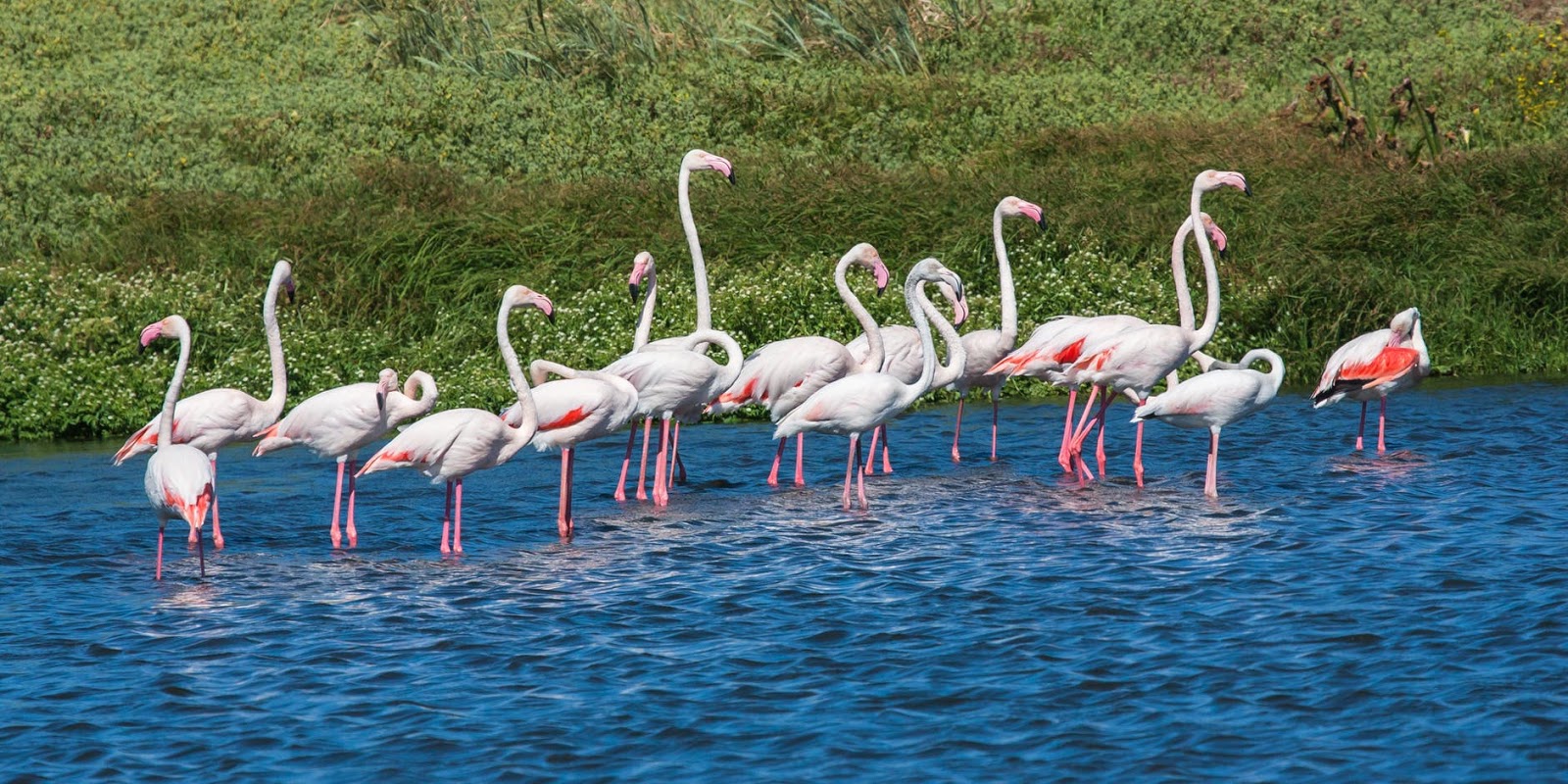
My mother and my uncle often told me about this place called Bhigwan, a 100km or so from Pune, where flamingoes were seen in large numbers every winter. Budding birder that I was, the word “flamingo” was like a flame to a moth. The very next winter I begged my uncle to take me there.

At the time, birdwatching at Bhigwan (which I came to know was just the name of the major settlement there) was a bit of a tricky affair. You had to find which place near the backwaters was not privately owned, dodge the landmines of cow and buffalo dung, and watch through binoculars. Photography was not an option unless you could bribe one of the fishermen to take you out on the water or had a massive lens. In addition, if you got too close to the water, there was the risk of sinking into the soft waterlogged mud. Not that any of that dampened my spirits.


Over the next few years, as I got my driving licence and got used to Indian traffic, I took my classmates to Bhigwan a few times. Uncooperative villagers, confusing directions, and the dismal condition of the road made it a tiresome journey just to see flamingoes from far away.

All that changed in 2011 when a few birding friends of mine introduced me to Sandip Nagare. Hailing from a small fishing village near Bhigwan named Kumbhargaon, Sandip and his brother used to take photographers in their boats to get up close photos of all the birds there. Slowly, Sandip started building up his business, buying more boats and training more people from the village.


Starting from only 3 people, Agnipankha now provides employment for 30 villagers in the area, and now has camping and dining facilities as well as rooms for overnight stay. Sandip also regularly rescues birds caught in fishing nets and often talks to the local youth about why birds are important. The employment he provides and the awareness that he spreads has led to a reduction in locals killing birds either for fun or for food.

An avid photographer himself as well as having authored books on Bhigwan’s birds, Sandip today not only provides birdwatchers and photographers opportunities to see and photograph the beautiful bird life of the area, but is also important in the local small-scale conservation of this hotspot.

Bhigwan, or to be precise the backwaters of the Ujjani Dam, has now become one of my favourite nearby birdwatching destinations. Apart from the large number of Greater Flamingoes that flock there every winter, the area also plays host to many other winter visitors, from ducks and waders, to Demoiselle Cranes, Western Marsh Harriers and Greater Spotted Eagles. The area also has an amazing diversity of resident birds such as Oriental and Small Pratincoles, Indian Coursers, Western Osprey, and more.


If you are a birdwatcher and have a few days free in Pune, Bhigwan is definitely worth a visit in any season!


Phone : +91 8010450000
Email: info@asianadventures.in
https://linktr.ee/aatoursandlodges


Tuesday, 24 September 2019

In the Wilderness of Gujarat


Sitting gloriously on the western coast of India and surging with medium and large size manufacturing industries, Gujarat has sprung up to become the economic powerhouse of India. The elaborate palace structures and intricate temple designs speak volumes about its laudable past. From producing great leaders to entice the world with its unique craft and sharing its peaceful space with communities persecuted in many parts of the world, Gujarat seems to leave a permanent mark on the globe. But there is another side to this very land unveiled by the inquisitive birders and wildlife enthusiasts.


The assemblage of diverse landscape boasting beautiful colonies of birds and mammals are thriving in the blissful corners of this vibrant land. Jamnagar is one such destination. Situated on the shores of Arabian Sea, the place is a giant gateway for seabirds and other migrant species who travel all the way from Europe and upper regions of Asia. During winters its unique amalgamation of freshwater lakes and marshy wetland transforms into the breeding ground for Typical plovers, Kentish Plover, Common ringed plover, Black Ibis, Grey Patridge, Caspian Gull, Pheasant-tailed Jacana, Green Stone Plover, Green Shank, Little Tern, Indian Skimmer, etc. One can get many opportunities to photograph the stunning congregation of Crab Plovers, Great Crested Grebe, and Oystercatcher from various angles.


Bhuj is yet another destination that has caught the eyes of many travel enthusiasts and photographers. Also popular by the name of Greater Rann of Kutch, the seemingly endless expanse of Bhuj radiates like a moon during nights. While getting soaked into the stunning vistas of white that extend to the horizon and beyond, and enjoying the colorful village life in the Rann, one can also take some time off to track down the mysterious lives of Chestnut Bellied Sandgrouse, Striolated buntings, Greater Painted-snipe, White-napped Tit, Variable Wheateater, Southern Grey Shrike, Rosy Startling, and the sought-after middle eastern bird the Grey Hypocolius.


 Six hours drive from Bhuj will bring you to the salt marshes of Little Rann of Kutch. The place has garnered international recognition for becoming the last refuge of Asiatic Wild Ass. The myriads of migratory birds gathering in its vast wetland seem to evoke a spectacular beauty. The congregation of Lesser & Greater Flamingos, the elegance of Desmoiselles Cranes, the muster of Northern Pintail, Common Pochard and the solitary lives of MacQueen's Bustard, Short-eared Owl, Marsh Harrier, Greater Hoopoe-Lark seem to add a surreal quality to this barren land.


Supporting the grassland Ecosystem, Velavadar National Park carries the highest population of Blackbuck- An antelope that has become vanished from many parts of Indian Subcontinent. The park also rose to fame for becoming the highest roosting point of Harriers. While traversing in the region one can find various species of Harriers including Montagu's Harrier, Pallid Harrier, Marsh Harrier, Hen Harrier, etc. During monsoon, one can also chance upon sighting the spectacular display of the critically endangered Lesser Florican which has become a prized possession of Velavadar National Park.


The last wilderness wonder of this vibrant land is GirNational Park of Sasan Gir. Known for its ultimate Lion Safari, the park is a classic example of sheer determination that has managed to swell the population of nearly extinct Asiatic Lion. Today, it has become the last bastion of these majestic felines that once dominated swathes and forests of Asia. Besides catering to the guests' needs, the staff work on creating birdhouses from the waste, growing organic food for the guests and using coconut pots instead of plastic pots to make the garden flowery.


Walking on these off the beaten tracks will surely make one realise the exclusive wildlife breathing in the diverse topography of Gujarat.

Phone : +91 8010450000
Email: info@asianadventures.in
https://linktr.ee/aatoursandlodges

Wednesday, 11 July 2018

A journey to Gir - A Gir National park Tour

This Tour of the Gir National Park with Asian Adventures will give you the best experience of Wildlife Safari. You will see a variety of birds which will make your heart and mind soar and of course the Asiatic lions


Some of them include black ibis, black pelican, Indian Pitta, Sand Grouse and many more.

The adventure starts right at the beginning when you head towards Ahmedabad. you will meet a cattle graveyard in which you will be able to see vultures busy cleaning the flesh and bones in a natural way.  


The next day you will head for Dasada. In case you forget, morning breakfast, lunch, and dinner are also included in our charges. You do not have to pay even a penny extra for it.  The morning walk in the local village of Dasada will be a blessing in organic freshness. You will witness the simple ways of living of the villagers and also get a chance to learn some cooking and enhance your culinary skills. The dishes will include the organic stuff that villagers prepare for the guests.


Moving ahead to Gir Birding Lodge, many other interesting things will come your way. The first and foremost thing that you will love here are the deciduous trees that are pleasing to the eyes. The next will be all the nature’s bounty that the forest will have. This includes various varieties of birds like a blossom-headed parakeet, flycatchers, tickle’s blue etc., lakes and other water bodies which are the perfect spots for clicking pictures. Book in advance and you will get the best facilities on our platform.