Showing posts with label Manas National Park. Show all posts

Monday, 21 December 2020

Wild Life & Birding Tour of Manas National park and Meghalaya


Located in the northeast Indian state of Assam, Manas National Park is a haven for birdwatchers.


The main attraction is the Bengal Florican, which can be seen in the grassland areas of the park, as well as Greater Adjutant, Black-tailed Crake, Red-headed Trogon, Swamp Francolin, Wreathed and Rufous-necked Hornbills, Rufous-rumped and Bristled Grassbirds, Rufous-vented Laughingthrush, Finn’s Weaver, Ibisbill, and a variety of other foothill species.


Cherrapunjee, in the state of Meghalaya, is famous for being one of the wettest places in the world. For birders though it is the Tawny-breasted Wren-Babbler that is a key reason to visit: a poorly known endemic species that is almost entirely restricted to Meghalaya.


Many of these birds are highly endangered, and their populations do require constant monitoring. This tour aims at learning about, as well as contributing towards, the monitoring efforts being carried out here.


E: info@asianadventures.in 
M: +91 8010450000
Don’t miss joining our ‘conservation-travel’ community! Click Here

Wednesday, 4 December 2019

The undisturbed wildlife of North East India


“The clearest way into the universe is through a forest wilderness”- great words of John Muir echoes in the mind as one pave the way through the dense thickets of Manas National Park. Setted in the Eastern Himalayan Foothills where the enchanting Manas River carrying the fresh drafts of glacier waters, the park is a doorway into the extraordinary world of Indian Wildlife.


The beautiful melange of the deciduous forests and alluvial grasslands have managed to create a secure habitat for some of the critically endangered species on this planet. It is one of the major reasons why this designated wildlife sanctuary has turned into the UNESCO World Heritage Site.


 Today as most Rhino species are facing the terrible fate of extinction it is incredible to see how the surging population of One-horned Rhinos popularly recognized as Indian Rhinos in Kaziranga and Manas National Park have made India stands apart from the rest of the world. Watching thousands of them scouting in their natural habitat gives a sense of accomplishment and fulfillment.


Besides being identified as a significant turf of Bengal Tigers, the wildlife sanctuaries have gathered enormous admiration for guarding one of the last habitats of Clouded leopards. An interesting trail in the jungle might lead you to this secretive and rare cat who prefers to live alone and hidden in the dense groves of trees.


Native to the Indian Subcontinent, Water Buffalo is one handsome species of the Bovini tribe mostly residing in the riverine of ManasNational Park. In Assam, these Buffalos are nicknamed as the tractors of the east because of they have buttressed Humanity survival through their plowing and transporting people throughout North East. They spend much of their day submerged in the muddy waters and use their wide-splayed hoofed feet to move in the swamps and wetlands.


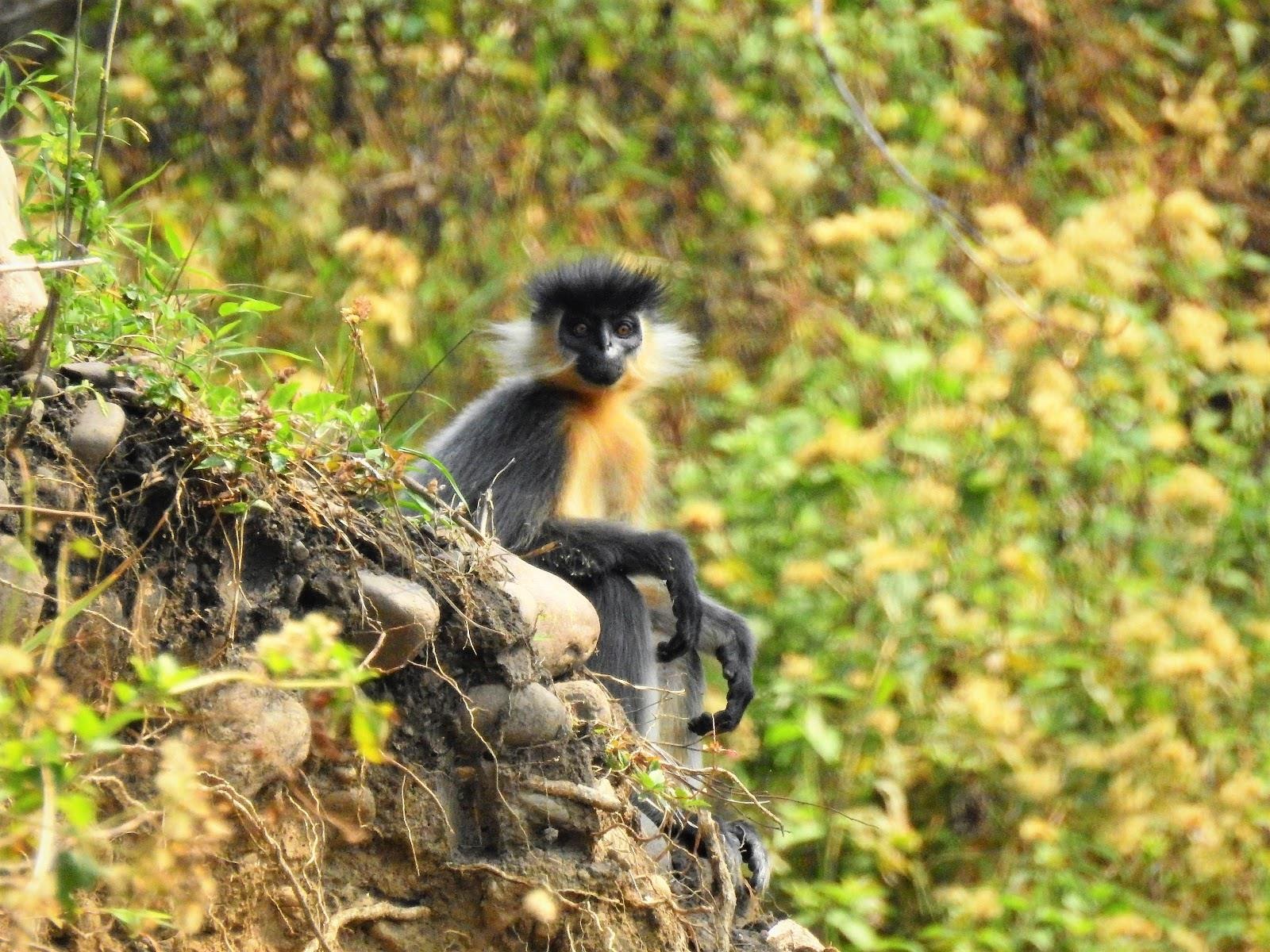
One-horned Rhinos, Bengal Tigers, Clouded Leopards, Water Buffalos, Capped Langur, Great Indian Hornbill, Pallas’s Fish Eagle, Bengal Floricans, Indian Roller, Assam Roofed Turtle, Assam Rabbit, Golden Langur, Jungle Owl, Spotted Owlet, Black Kite, Spot-billed Pelican are some of the rare and endangered species that will hook eyes in sheer astonishment while navigating through broadleaf forest of Kaziranga National Park and riverine ecosystem of Manas National Park.

E: info@asianadventures.in
M:  +91-9266519519


Monday, 27 May 2019

The Magic of Indian Monsoon


The monsoon clouds surging all over India is not only a blessing in disguise for the farmers but also a window of opportunity for those who want to tap into the cryptic world of winged species. Across the globe, India is identified as the largest democratic country associated with the oldest civilization, youngest population, vibrant culture and delectable cuisine. With so much going on in the peripheral of the country only a few intrigued eyes could witness the beauty of fluttering wings in the virgin forests and untamed terrains of the country.


Forty kilometers away from the spiritual city of Ajmer lies the huge grasslands of Sonkhaliya. For a layman, the place is yet another local village which specializes in producing Moong Daal (a kind of lentil) however for a birdwatcher, the region is a holy grail to sight the critically endangered Lesser Florican. Once upon a time, the population of these bustards swelled across Asian but today they are confined in the scattered pockets of Western and Central India and Sonkhaliya is one such space. Being extremely shy, these birds shield themselves in the tall blades of grass to remain hidden from the people's attention except in the monsoon when these birds jump from the grassland with a unique call and flapping wings to attract their better halves.


Birdwatchers and photographers come all the way to India just to marvel at the captivating spectacles like these. Besides carrying the population of Lesser Florican the patches of dense clumps have also become a humble abode for the quail family including Rain Quail, and Rock Bush Quail.


Mounting up in the hills of Himalayas will unlock the gateway to the glorious kingdom of Kashmir and Ladakh. If one is an embodiment of tranquility and serenity the other is a passage to the land of high passes, rugged terrains, and pristine rivers. As you start exploring the unsullied landscape and virgin forest you might end up witnessing the mystical lives of Himalayan birds untouched till date.


Being part of the finch family Orange Bullfinch can be frequently sighted soaring high in the coniferous forests of Kashmir. The bird has ended up getting in the lifer's list of many birdwatchers due to its striking features and rarity to find them in other parts of the world. Birding in Kashmir will be an incomplete venture if one's eyes don't lay upon Kashmir Nuthatch and Kashmir Nutcracker. Generally coming out in the season of monsoon, these endemic species have managed to permeate parts of the valley with their uncommon beauty and unique call. The rugged terrain and lofty mountains of Ladakh have gained worldwide popularity for preserving the ancient and mystical monasteries reverberating with the Buddhist Hymes.


Covered with deep blue sky and unsullied landscape, the land of high passes has always cast a magical spell on travelers through its magnificent beauty, humble people and tranquil surroundings. But in the eyes of birdwatchers and wildlife photographers, the place has been a holy grail to view the beautiful birding colonies.


Leh and Tso Kar are the two important regions where one can get prolific sights of Lammergeier, Golden Eagle, Chukar Partridge, Himalayan Griffon, Common Kestrel, Upland Buzzard, Common Hoopoe, Bar-headed Goose, Ruddy Shelduck, Mallard, Northern Pintail, Common Merganser, Eurasian Cuckoo, Alpine Swift, Little Owl, Eurasian Eagle Owl, Black-necked Crane etc.


It is only in the monsoon one get to see the witness the prolific display of Lesser Florican and the great fleet of Bearded Vulture if the coniferous forests of Kashmir are blessed by the presence of the rarest Large-spotted nutcracker the glacial lakes of Ladakh are clouded by migratory birds coming from Siberia and Europe.


Phone: +918010450000
Email: info@asianadventures.in
https://linktr.ee/aatoursandlodges

Thursday, 26 July 2018

My Top Wildlife parks of India

It's the only place in India where you can spot the one-horned rhinoceros, and that's why it often features in everyone's must-visit list. Besides, India's Northeastern state of Assam is recognized for its lush landscapes, you can experience the best of a wildlife nature park with various other wild animals and birds to sight while living the quiet life at the bank of the great Brahmaputra.
 Nearest airport: Guwahati and Jorhat


The Sunderbans, famous for the enchanting mangrove forests, is also the home of the Bengal tigers as well as migratory birds, flying fox, macaques, mongoose and the salt-water crocodile. On some days during low tide, you can even find beautiful sea creatures on the mudflats. The boat rides are recommended when you are in the Sunderbans.
Nearest airport: Kolkata


A favorite holiday destination from Bengaluru and Mysuru, Many say that it's almost assured that you will spot a large variety of Birds and mammals at the Manas National Park. Although Bandipur is adjacent is another popular wildlife destination in the vicinity, many prefer Manas for its lush greenery with pretty waterfalls and streams. You can also spot bison, elephants, and star.
 Nearest airport: Mysuru


Friday, 20 July 2018

India Is The Next Big Wildlife Hub Of The Planet After Africa

India is a country world-renowned for its diverse culture and rich traditions. Moreover, for the wildlife enthusiasts, it is the turf of Royal Bengal Tigers and of course with a part also dominated by the endemic Asiatic lions. But people have conveniently overlooked the rich wildlife prospering in the eastern part of India. Manas National Park is one such place which is located in the foothills of the Himalayas in the Indian state of Assam.


As you unlock the gateway to this dense forested national park, you will feel as if you have entered a new world altogether. A world where nature's judgment is paramount, where a capped langur lives amicably with other golden langurs unless the roar of Bengal tigers sends a sudden wave of panic in the forest.


As you further proceed in the woods, you will come across some grassy fields, but wait, don't take them as any other ordinary field it is the residence for the elegant Bengal Florican. A highly critical species in the world and spotting them in their natural habitat is a massive breakthrough for any birdwatcher. While exploring the park, it is very important to have razor sharp eyes and bold ears because no one wants to miss the amazing acts of jungle owl giving a 365-degree twist to his head.


As you move further, you will be introduced to the Asian Leopard and his cousin Clouded Leopard although sighting them at the same time is like a fantasy for any wildlife lover. The pattern of their fur makes all the difference. While the Clouded Leopard has the fur of a dark grey or ochreous ground-color, the Asian Leopard is adorned with the spotted or the rosette patterns of fur.


As you proceed forward the beautiful trails of the park, it will bring you near the secret lives of Great and Grey Woodpeckers. These family-oriented birds are seen as important dispersers of forest tree species. Their love for fruit has earned them the nickname of fruit birds. The frequent fleets of birds such as Kingfishers, Eagret, Khalij Pheasants, fishing eagle, Scarlet Minivet, Black kite add to the glory of the place. However, the culmination of the park is when you have sighted the Great One Horned Rhinoceros.


Listed as a vulnerable species across the world, India is a proud owner of its habitat. Unlike the other species of rhinoceros, who are the chronic victim of poaching, India has successfully created a protective shield across its habitat. To get the lovely sighting of the birds and mammals or to undertake your passion for wildlife photography, the best time to visit the park is from October to May.