Showing posts with label birding tours in india. Show all posts

Saturday, 17 June 2023

Asian Adventures: Exploring the Natural Wonders and Cultural Treasures

 Welcome to Asian Adventures, where a world of breathtaking landscapes, diverse wildlife, captivating cultures, and amazing experiences await you. Whether you're an outdoor enthusiast, a wildlife lover, or a culture aficionado, Asian Adventures promises to take you on unforgettable adventures across Asia.


1. Awe-Inspiring Wildlife Encounters:

Asian Adventures provides unparalleled opportunities to witness the majestic wildlife of Asia, especially the Indian Subcontinent. From dense rainforests to expansive savannas, from lush mountain forests to coastal habitats, this region is home to an incredible variety of flora and fauna, much of it endemic. Through our well-curated tours and safaris, Asian Adventures allows travelers to explore these natural wonders while ensuring minimal impact on the environment.


Imagine yourself standing in the lush jungles of the Western Ghats, gazing up at the amazing endemic hornbills in the treetops. Or picture yourself on a boat safari along the Chambal River, where you spot the elusive Gangetic Dolphins gracefully breaking the surface or endangered Gharials basking on the banks. Asian Adventures brings these extraordinary encounters to life, offering a chance to connect with nature in the most authentic way.


2. Trekking through Breathtaking Landscapes:

For adventure seekers and nature enthusiasts, Asian Adventures offers a plethora of trekking options that will leave you spellbound. Whether it's hiking through the rugged terrains of the Himalayas, exploring the lush tea plantations in Sri Lanka, or venturing into the remote corners of Northeast India, there's a trek for every level of experience and fitness.

The trails lead you to stunning vistas, hidden valleys, and remote villages, giving you a glimpse into the rich cultures and traditions of the local communities. The knowledgeable guides ensure your safety while providing fascinating insights into the region's ecology, history, and customs. Asian Adventures allows you to challenge yourself physically while immersing yourself in the awe-inspiring beauty of Asia.


3. Cultural Immersion and Heritage Exploration:

Asia is a treasure trove of ancient civilizations, vibrant traditions, and remarkable architectural marvels. Asian Adventures understands the significance of cultural immersion and offers unique experiences to explore the rich heritage of the continent.

Embark on a cultural tour of India, where you can witness mesmerizing dance performances, visit centuries-old temples and forts, and participate in colourful festivals. Immerse yourself in the tranquility of Bhutan, a land of monasteries and prayer flags fluttering in the breeze. Asian Adventures provides a gateway to unlock the mysteries of Asia's cultural tapestry.


4. Responsible and Sustainable Tourism:

Asian Adventures believes in responsible and sustainable tourism, striving to minimize the ecological footprint while creating a positive impact on local communities. They collaborate with local guides and communities, ensuring fair employment practices and supporting conservation efforts.

Our commitment to responsible travel is reflected in our many conservation projects, which aim to protect endangered species and habitats across India, as well as showcase the rich cultures of local communities. By choosing Asian Adventures, travelers actively contribute to the preservation of the region's natural and cultural heritage.


Asian Adventures is a gateway to explore the wonders of Asia in an immersive and responsible manner. Whether it's encountering wildlife in their natural habitats, trekking through breathtaking landscapes, or delving into the rich tapestry of Asian cultures, this platform offers unforgettable experiences.

As you embark on your travels with Asian Adventures, be prepared to be captivated by the diverse landscapes, enchanted by the vibrant cultures, and moved by the commitment to sustainability. Let Asian Adventures be your guide to unlocking the secrets of Asia and creating lasting memories that will stay with you for a lifetime.


For More details, contact us : https://linktr.ee/asianadventures


Wednesday, 11 March 2020

Manas National Park – Best Time to Visit and Things to Do


Manas National Park in Assam is well regarded as a natural heritage, biosphere reserve, Project Elephant Reserve and Project Tiger Reserve at once. The national park lies on the foothills of Himalayas and is flanked by the Manas River, from which it gets its name. It is home to Wild Water Buffalos and Royal Bengal Tiger with plenty of activities to enjoy. Manas National Park is a land of fulfilling experience and wholesome adventure in nature.


About Manas National Park
Manas National Park is a densely forested region in the Eastern Himalayas. The Manas River is a huge tributary with five different rivers along with the Brahmaputra River. The Savannah bedrocks are formed of sandstone and limestone. You can get a permit from the Field's Director Office to enter the park on Barpeta Road. Forest department doesn’t offer any guide or jeep. So, you need to hire private jeeps. You can also take your personal vehicle in the park. Bansbari Range Office also receives entry fee to the park.


Best Time to Visit
The best time to visit Manas National Park is between November and April, when the weather is pleasant and there are high chances of spotting wild animals. The park remains open daily except for safety concerns or rain. From May to October, the park is open for a short period. The park remains closed in monsoons, i.e. from June to September.

 Things to do

Jeep Safari
Many endangered animals and bird species call the wilderness of Manas National Park their home. You can spot exotic and rare animals in Manas wildlife sanctuary like Pygmy Hog, Roofed Turtle, Hispid Hare, Bengal Florican, Indian Rhinoceros, and more.

Timings – 9AM to 12PM for Morning Safari and 2PM to 5PM for Afternoon Safari

Elephant Safari
An elephant safari is also available to get up close to more wild animals. These beautiful giants will take you through the areas where jeep cannot enter. So, be ready to get a unique insight to the park.

Timings – 6AM and 7AM

Getting There

By Rail – Guwahati is well connected to all major cities of the country and it’s the only railway station of its kind in North East. A lot of trains originate and halt here, including Rajdhani Express. From there, you can hop on another train to Barpeta station which is located only 22 km by road from Manas.

By Air – Similarly, Guwahati is the closest airport which is 180km away. You can easily take regular flights from different cities like Jaipur, Mumbai, New Delhi, and Bangalore. From the airport, you can hire a cab or taxi.

By Road – Manas also has good road connectivity from Guwahati, which takes up to 5 hours to cover 176 km.  


E: info@asianadventures.in

Don’t miss joining our ‘conservation-travel’ community! Click Here


Friday, 6 March 2020

Little Rann of Kutch – A Memorable Trip to Explore Indian Wild Ass


This year in the month of February, I visited Little Rann of Kutch with my family. After visiting Gir, I was damn excited to head to Little Rann, the only and last habitat of Indian Wild Ass.


In case you don’t know, Little Rann of Kutch is a huge marshland of salt in western India. The Little Rann of Kutch, Great Rann and Banni grasslands are located in Kutch district and stretched over 30,000 sq. km. It is well known as the last and only refuge to Khur “Indian Wild Ass” in the world. The government has announced it the Indian Wild Ass Sanctuary for its conservation. This bleak landscape is an ecologically vital landscape and bio-diverse area for its wildlife. You can spot a lot of migratory and local water bids in winters. If you are getting here in summer, bear in mind that it is one of the hottest regions in India. The temperature soars around 41°C in summer and peaks up to 49.5°C. On the other side, it drops to 0 °C in winter.

We started our journey on Friday morning from Ahmedabad. Our stay was located around 130 km from the city. There are different ways to access this desert area. We reached the camp by 2PM when our tummies were growling. We halted at our vivid round shaped huts, got fresh and prepared for lunch. The hotel staff served lunch. After having lunch, we returned back to our rooms for some rest. At 4.30PM, we had to leave our accommodation for evening safari.

After driving a few kilometers, we found the artificial white salt mounds. From the salt pans, the salt is deposited and goes to the factory for processing. A lot of dumpers and tractors carry it along. We spotted Nilgai in the bushes somewhere around a few meters away. Nilgais are a bit taller than goats. India has over 6 types of antelopes and Nilgai is the one found here. Others are Gazelle (known for their curvy and long horns), Sambar, Spotted deers, Black Buck and Chinkara.


Finally on the next stop, we found a herd of Wild Ass around a few meters away. They have vast brown spots on white skin. You can spot the males with their hide’s color. The females have whiter hides than that of males. These animals can survive in extreme temperatures of the desert. The temperature reaches over 49 degrees C in summer. The camp opens only from October to mid of March. We got to know that Asian Wild Ass has three varieties along with Indian Wild Ass. And three of them are found in Persia, Turkey, and Mongolia.

Next day, we left the camp around 12 PM and had a buffet lunch at a restaurant. Finally, we reached Ahmedabad by evening.


Phone: +918010450000
Email: info@asianadventures.in
https://linktr.ee/aatoursandlodges

Don’t miss joining our ‘conservation-travel’ community! Click Here


Tuesday, 3 March 2020

Sukau Rainforest Lodge – A Spectacular Tour to mesmerizing Rainforest


When I visited Borneo, I must tell you that I entered this unique and huge island with a blank mind, without any expectations. Somewhere on my mind, I had a dream to spot an orangutan in the wild. I just decided to get there when I read an article about the adverse effect of the palm oil industry on the existence of these beautiful creatures, before it’s too late.

I decided to visit Sukau Rainforest Lodge and I just had a trip of a lifetime. Along with orangutans, I also spotted the rare Pygmy Elephants and other animals.

Wildlife Safari Experience
Trust me, I am not a morning person. But I still woke up early in the morning because gliding down the misty river was truly a magical experience. Our tour included boat safaris on electric boats to avoid noise pollution in the wilderness. We enjoyed two safaris at dawn and in the afternoon to improve the chances to find orangutans and other fauna species.


Our guide was very knowledgeable who told us about the wildlife we found. We spotted a herd of giant Pygmy elephants en-route the lodge.  We also spotted a huge crocodile, hornbills, proboscis monkey and finally, the orangutans (kings of the jungle). There were two orangutans and one was eating fruits from the tree and it was truly a dream come true.

We also spotted long-tailed macaques and birds. Witnessing this magical show was truly an emotional moment. Anyone can indulge in this activity as you just have to sit on the boat and witness the live show of wilderness.

If it’s not enough, you can also hit the jungles on a night cruise. I skipped it because I was overwhelmed seeing all the animals in daylight. But you can also see owls and other wildlife species at night you cannot find in daytime.

Resting at Sukau Rainforest Lodge
Sukau Rainforest Lodge is truly a special place you can visit from Sandakan to Sukau. It has good connectivity with raised walkways and is built of local hardwood. It is located on the banks of Kinabatangan River. The lodge is blended with the forest so well that you look at the trees all around when you look outside the window. It is just in the heart of the jungle.

Best Time to Visit Sabah
Overall, the best time to explore the wilderness of Sabah is from May to September. Most people all over the internet will suggest you skip monsoons. I visited Borneo in January 2020. Since it’s the rainy season over there, many people told me to skip this month. Luckily, I didn’t stop. It just rained for a few hours but it didn’t hinder my travel plan. In fact, we enjoyed the pleasant weather with gorgeous and vivid sunsets.

Phone: +918010450000
Email: info@asianadventures.in
https://linktr.ee/aatoursandlodges

Don’t miss joining our ‘conservation-travel’ community! Click Here


Monday, 2 March 2020

An Amazing and Mesmerizing Bird Watching Tour to Bhutan


Bhutan is definitely the best place and a paradise for bird watchers who wish to spot Himalayan birds. When we reached Bhutan, we were surprised to hear that the country has more than 600 species of birds. We also spotted dozens of species without any effort, such as Himalayan Monal, Blood Pheasant, Yellow-throated Fulvetta, Fire-tailed Myzornis, Satyr Tragopan, Long-billed, Wedge-billed, White-naped Yuhina, Bar-winged Wren-Babblers, yellow-vented warbler, and Blue Fronted Robin. bird watching  Tours 


It may be because Bhutan is one of those countries which have five different habitats that are ideal for birds like cool huge leaves forests, alpine, scrub and forests, warm and subtropical broad-leafed forests, and wetlands.

On Day 1, we arrived at Paro International Airport. After reaching the hotel and having meals, we hit the river banks. Over there, we spotted common sandpiper, black-tailed crake, dark-throated thrush, and olive-backed pipit.


The next morning, we took a drive to the highest pass in Bhutan, Chelela Pass. We observed three species of vivid Himalayan Monal (Pheasants) and herds of Kalij Pheasant and Blood Pheasants. Later on, we went back to our hotel.


 On Day 3, we drove to Thimphu. We found different birds in Dochula Pass like Rufous-breasted Bush Robin, Fire-tailed Myzornis, Rufous-gorgeted flycatcher, yellow-billed Flycatcher, and others. We continued our drive to Punakha. After having lunch, we visited Punakha Dzong and Punthang Dechen Phodrang.


On Day 4, we got up early and drove to the peaceful and heavenly Tsirang forest, which was recently opened for tourism purposes. We explored different birds all day like Great Hornbill and Rufous-necked Hornbill.


On day 5, we enjoyed birding in the jungle, which houses a lot of species like Pied Falconet, Nuthatch, Pin-tailed green pigeon, Black-backed forktail, Sultan Tit, Black Eagle, and even more.


We also enjoyed the next day while birding in Gelephu and spotted Large Hawk-Cuckoo, Jungle Babbler, Pied Falconet, Great and Wreathed Hornbill, Pin-tailed Green Pigeon, Indian Roller and even more.
Next day, we finalized our trip and said farewell to Bhutan. We have also seen some more birds on the way.

Is Bhutan worth a visit?
Of course! Every moment we spent here was really a memorable part of our life. It’s definitely an amazing place. It’s been one month but I am still dreaming of going back again someday. If you don’t care about expenses but want a memorable experience in return, look no further than Bhutan.

What about Transportation?
There are private vehicles provided by tour operators for ground transportation. You can rest assured to have clean AC vehicles. However, you should be prepared for narrow tracks and bad roads when you go uphill. Weather conditions may also affect your travel time. If you are getting there, I recommend you visit during September October or November when autumn is at its peak.

Phone: +918010450000
Email: info@asianadventures.in
https://linktr.ee/aatoursandlodges

Don’t miss joining our ‘conservation-travel’ community! Click Here

Thursday, 27 February 2020

Our Memorable and Exciting Trip to Chitwan National Park in Nepal


We had heard a lot about Chitwan National Park that houses various species of animals, birds, and insects and especially, one-horned rhinoceros. We planned a family trip last weekend to the national park in Nepal. If you don’t want your trip to be spoiled by rain, be sure to plan your trip from October to March.

We boarded an AC bus at Gorakhpur, which is the closest city. We reached Kathmandu within 5 hours. You can also fly to Kathmandu and then take a cab from the airport. From Kathmandu, we took another bus to Pokhara and then to Chitwan. We canoed across the river named “Narayani '' towards the main jungle area.

At twilight, we spotted a variety of birds. We spotted kingfishers, cranes, egrets, and ospreys. It is truly a paradise for bird watchers. There was unruffled silence in our jungle cottage.


Early in the morning, we had breakfast and rushed to walk along the jungle with a guide. We have got some briefing about the rules of the jungle and how to maintain silence. Our guide told us to be alert. We started walking on the tracks and the guide introduced us to several riverine vegetation, medicinal plants, and Sal trees that covered the dense greens. We walked further and suddenly a rhino stood in front of the trek and then moved away. It was such a great experience.

The next day, we went on an elephant safari to get into the jungle. It is full of rich flora and fauna. It has over 150 Bengal tigers, several types of deer, leopards, sloth bears, monkeys, and antelope.


The mahout helped us to climb stairs and sit over the elephant’s back. We found a swamp deer playing along with us. There was a strong and pleasant smell of a jungle with lots of bushes, trees, and flowering plants.

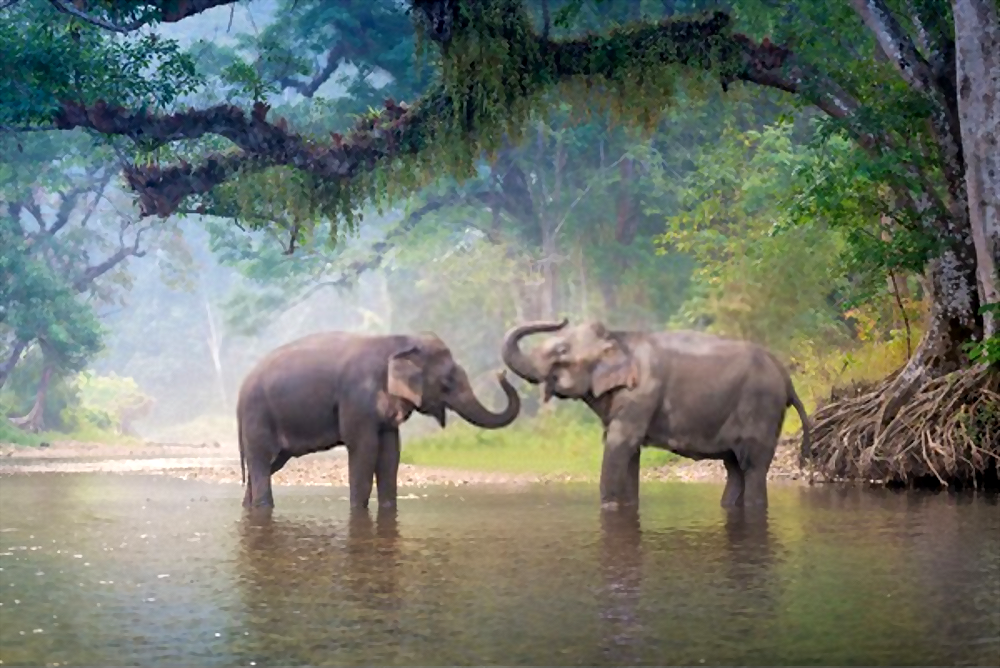
After a tiring day of serving the tourists, elephants were seen sprinkling water and enjoying a bath in the afternoon. The mahout fed them all the time. We sat across the fireplace in the evening and enjoyed the chilly weather.

On Day 3, we hit the jungle again for a jeep safari. We spotted a mother rhino with a baby. Forest authorities are taking good care of wildlife here. We had a full view of the jungle in an open jeep. We saw peacocks that came and ran away. We were not that lucky to spot tigers there.

The next morning we had to check out and go back to our destination. We got into the canoe with our luggage and we reached our cars. Our adventurous journey finally came to an end but we took memories to last a lifetime from the jungle.


Phone: +918010450000
Email: info@asianadventures.in
https://linktr.ee/aatoursandlodges

Don’t miss joining our ‘conservation-travel’ community! Click Here

Monday, 24 February 2020

Gorumara National Park – Climate, Flora, and Fauna, and Other Details


Gorumara National Park is truly a worth-exploring attraction and a natural splendor. This scenic attraction is filled with thick grasslands and forests. It houses plenty of flora and fauna, including Indian rhinoceros. Gorumara National Park is well located by River Raidak and Murti. In 1949, it was announced as wildlife sanctuary and in 1992, it became a national park. In 2009, the Ministry of Environment & Forests announced it the most conserved region. It is truly a paradise for wildlife enthusiasts who haven’t explored its sprawling beauty. You can definitely enjoy a great experience and thrilling trip.

Flora and Fauna

Flora – Gorumara National Park is well regarded for having deciduous and tropical forests. Sal is found in density here, along with Simul, Teak, Khair and Siris trees. You can also find riverine grasslands and bamboo groves.

Fauna – Indian rhinoceros are found in abundance here. Along with it, you can also find elephants, sloth bear, barking deer, hog deer, wild boar, Indian wolves, and leopard. The national park also houses a few poisonous snakes like King Cobra. It has over 300 species of birds like scarlet minivet, Asian paradise flycatchers, woodpeckers, Indian hornbills, pheasants, peafowls, and brahminy duck.


Climate and Best Time to Visit
Gorumara mostly has tropical weather all around the year. It receives temperatures from 23 degrees to 10 degrees from summer to winter respectively. The rainy season lasts from June to September and it receives moderate and heavy rainfall in this season. In monsoon, the weather is highly humid.

The national park remains open from October to June and closed during monsoons when animals breed from June 15 to mid-September. So, November to March is the ideal time when you can find lush greens and higher chances of animal sightings.

Getting There

By Air – Bagdogra is the nearest airport which is just 80 km from Gorumara National Park. You can take regular flights from Mumbai, Delhi, and Kolkata. By reaching the airport, you can hire a taxi and it will take up to 2 hours.

By Rail – New Maynaguri is the nearest railway station at 20km. It has good connectivity to Kolkata and other North-eastern and Eastern cities.

By Road – Siliguri is located around 72 km from Gorumara National Park via Canal Road and the journey takes over 2 hours. It is located 32 km from Jalpaiguri via NH717 and it takes only 1 hour. You can easily drive through these places as roads are very smooth here.

Timings
Gorumara National Park welcomes tourists every day except Thursdays. The park opens from 6 AM to 5 PM. For watchtower tours and safaris, you can choose from four shifts –
6.30 AM to 8 AM
9 AM to 10.30 AM
1 PM to 2.30 PM
3.30 PM to 5 PM

Phone: +918010450000
Email: info@asianadventures.in
https://linktr.ee/aatoursandlodges

Don’t miss joining our ‘conservation-travel’ community! Click Here


Thursday, 20 February 2020

Eagle Nest Wildlife Sanctuary – A Birder’s Paradise in Arunachal Pradesh


With plenty of biodiversity of nature, Northeast India is truly a dream destination for many bird watchers. Eagle Nest Wildlife Sanctuary is the best kept secret by nature in West Kameng, Arunachal Pradesh. The national park is covered by Pakhui Tiger Reserve towards the east and Sessa Orchid Sanctuary towards the northeast. Eaglenest Wildlife Sanctuary is known to have vivid wildlife, imposing landscape, exciting places, and vibrant flora.

This wildlife reserve houses the rare animal breeds and subtropical climate. It receives occasional snowfall in winter and a lot of rainfall due to high altitude. In winter, it receives subzero temperature.

Flora & Fauna
The Eaglenest Sanctuary is the quaint paradise of birds and wildlife at the northeast frontier of Tawang blessed with sweeping views of nature. The sanctuary is the leading bird watching destination with over 700 bird species.


Bugun Liocichla is an unusual bird species after which the sanctuary rose to prominence. These birds belong to the Bugun family and live in a forest area. Some of the rare bird species found are Beautiful Nuthatch, Ward’s Trogon, and Wedge-billed Babbler.

Along with plenty of bird species, the sanctuary also houses snakes, amphibians, butterflies and lizards. Some of the animal species are Asiatic black bear, gaur, red panda, Bengal tiger, Asian elephant and capped Langur found here.

Accommodation
Some of the major highlights here are Sessni, Bompu Camp, and Lama Camp in the sanctuary area. Bhalukpong is the easiest way to reach Lama Camp and is the closest railhead here. These camps are located around the ideal birding spots in sanctuary. These camps also organize bird watching tours.

Getting There

By Rail – Bhalukpong is the closest railway station to the sanctuary. It is located only 94 km away. You can hire a cab to the sanctuary.

By air – The nearest airport to Eaglenest sanctuary is Tezpur, which is located around 150 km. If you are getting here from outside India, Guwahati international airport is located 335 km away. You can get here by taxi.

By Road – The sanctuary is close to several major cities like Bomdila, Tawang and Tezpur to Tawang-Tezpur Road. You can easily avail the taxi and bus services from these cities to sanctuary.

Best time to visit
The best time to visit this sanctuary is from October to April as it has pleasant weather. So, tourists can easily enjoy various activities and tours inside the sanctuary. You can also visit the sanctuary from March to April. Be sure to book a camp beforehand as this place remains crowded. The camp is not available in monsoons. You can also get here from the middle of November to February to see pleasant winter and avoid the crowd.  You can enjoy a lot of activities here peacefully and witness the rich ecology nature has to offer.

E: info@asianadventures.in
M: +91 8010450000

Don’t miss joining our ‘conservation-travel’ community! Click Here


Tuesday, 11 February 2020

An Ultimate Travel Guide to Gir National Park


Gir National Park is well known to attract a huge crowd of tourists to witness the iconic Asiatic lions in their natural habitat. Gir National Park is the only paradise on earth that these beasts call home. Asiatic Lions were almost listed critically endangered and hunted to extinction in 2000. Their population has recovered well thanks to the conservation efforts by the government. The core zone of the park extends to over 260 sq. km and became the national park in the year 1975. A decade ago, the sanctuary was established.

According to 2015’s latest census, there has been a 27% rise in the population of Asiatic Lions in Gir and nearby areas since the year 2010. With 213 cubs, 201 females, and 109 male lions, there are 523 lions recorded in the last census. Around 600 lions were found in the area in a recent count by the Gujarat government in March 2018. Officially, the next census is scheduled by the end of 2020. Leopards, jackals, antelope and deer also call Gir’s forested hills their home. It also has over 300 resident bird species and crocodiles.

Location
Gir National Park is located 360 km from Ahmedabad, 40 km from Veraval and 65 km from Junagarh, in the southwest part of Gujarat. Sasan Gir Village houses the entry gate to the park and the park orientation and reception center is located at the park, which is located next to the official Sinh Sadan guest house by the forest department.

It also has Devalia Safari Park (Gir Interpretation Zone) which is located around 12km west of Devalia. This area is enclosed to around 4 sq. km and has different types of wild animals, along with lions. You can embark on around 40 minutes of tour on a bus.

Getting There
Ahmedabad is located only 7 hours away and is the closest major airport. At three hours away is a smaller airport of Rajkot and Diu is 2 hours away.

Junagarh is the closest railway station and is easy to approach to the park. Trains from Rajkot and Ahmedabad also stop here at Junagarh and are well connected to several major cities.

By road, the national park is located 1 and a half hours away from Sasan Gir. It is one hour away if you are getting there via Veraval. You can also save money by getting here through public buses.

You can take a private bus from Ahmedabad to Sasan Gir to reach Sinh Saan Guest House, which is even easier than reaching by train. Private bus stands arrange buses which take around 7 hours near Paldi bus stop. You don’t have to book a bus in advance.

Best time to visit
Most tourists prefer December to March to visit the national park. But it gets crowded in peak hours and receives long queues. From March to May, you can also see Asiatic lions when they come out near water sources. Try to take the first safari in the morning where they remain very active. Rest of the day, lions prefer to sleep and don’t move around. Avoid holidays and weekends when the park receives a lot of crowds and charges higher fees.

Phone: +918010450000
Email: info@asianadventures.in
https://linktr.ee/aatoursandlodges

Don’t miss joining our ‘conservation-travel’ community! Click Here


Friday, 7 February 2020

Chidiya Tapu, Port Blair – Entry Timings, Things to Do and Other Details


Covered by thick mangroves and dense greens, Chidiya Tapu is a great trekking destination and island in the Andamans. It is truly a great adventure spot and a paradise for bird watchers. It is an ultimate heaven and delight to the senses.

Tips for Tourists
Stay updated with weather status and pack accordingly
Keep all the basic medications handy
Always carry your first aid kit
Don’t leave your binoculars and digital camera behind as the island is full of migratory birds
Always wear goggles and carry your swimsuits as you will definitely get wet

Trivia and Interesting Facts
Chidiya Tapu is located only 20 km from Port Blair
Munda Pahad Beach and Chidiya Tapu are the clean and most well-maintained destinations in Andamans
 Closest to Port Blair and is accessible easily
Belongs to Emerald Islands
Established in 2001 and stretched around 40 hectares

Things to do

You should definitely try bird watching here and the island is well known for its different bird species which are indigenous here.
Enjoy various fun water activities like scuba diving, snorkeling, deep sea walking, boating and pearl hunting
Sunset is definitely something you shouldn’t miss. You can definitely have the most mesmerizing and exciting sunset here at Sunset Point.
Don’t forget to trek to Munda Pahad for exotic views.


Do you really need a guide?
It is not required but it is really worth having a local guide who has proper knowledge and experience about the places. You can benefit from the expertise of a guide in Andamans or when you arrive at Port Blair. There are plenty of tour guides available in this destination.

Getting There
Chidiya Tapu is an island located just 20 km from Port Blair. You can easily get there by road. You can even hire a boat to sail to the island.

When to visit?
Don’t plan your trip to the islands in a heavy monsoon period as the beach wouldn’t be open for activities. So, you will miss the chances for having fun. Summer is full of heat waves. It is also not the right time to visit. The best time is before the arrival of heavy rains and after heat waves. August to February is the best time for tourists to visit the islands. During these months, you can also witness a huge number of birds and this place looks even more beautiful after monsoons.

Where to go after visiting Chidiya Tapu?
The whole island is a tourist destination in itself and is surely worth a visit for a tourist. You can definitely add the following places to your bucket list –
Port Blair
Munda Pahad Beach
Chidiya Tapu Biological Park
Munda Pahad hills

E: info@asianadventures.in
M: +91 8010450000
Don’t miss joining our ‘conservation-travel’ community! Click Here

Sunday, 2 February 2020

Velavadar National Park – Flora & Fauna, Best Time to Visit and Other Details


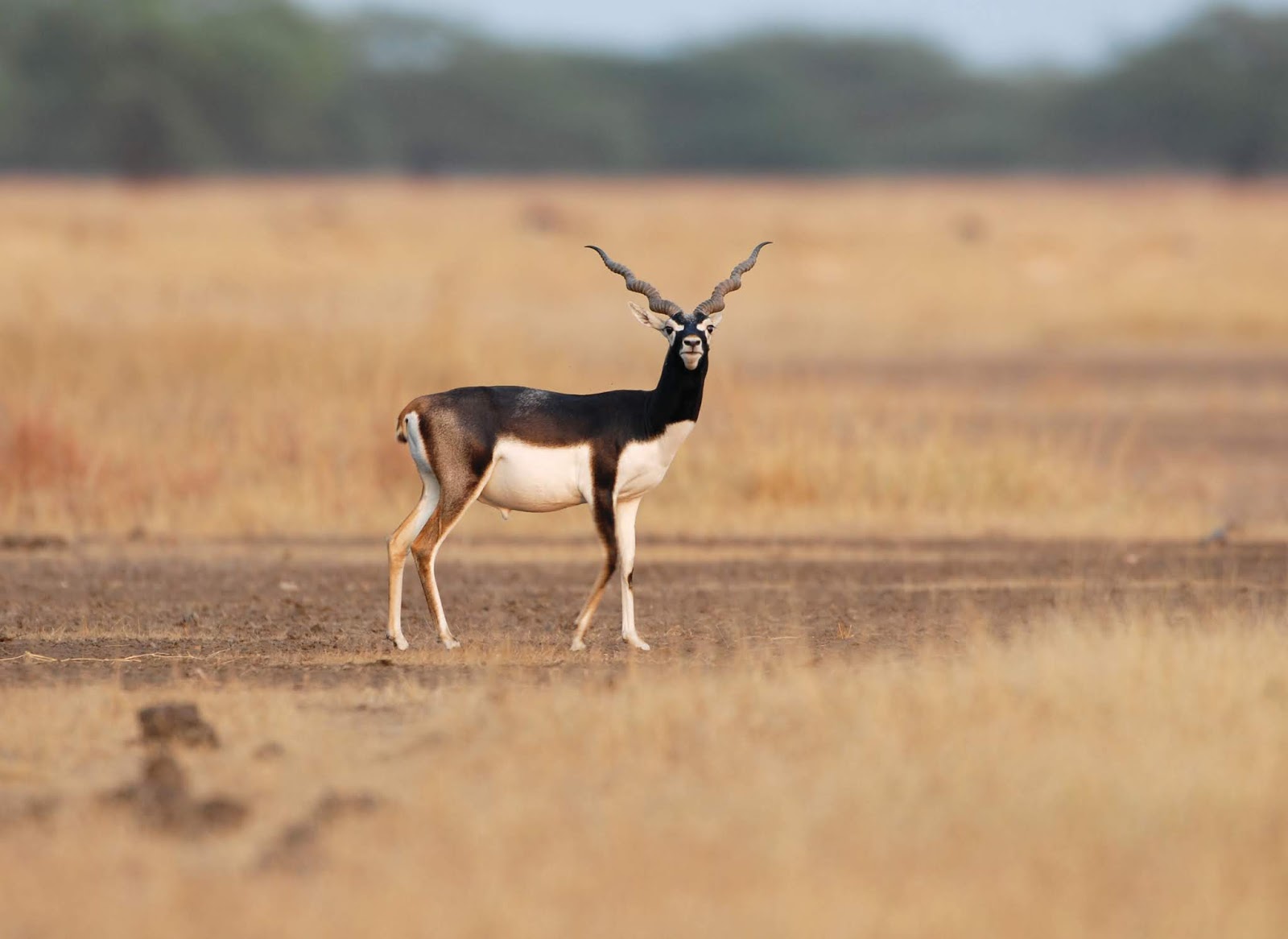
Blackbucks are the signature wildlife species in VelavadarNational Park and this corkscrew horned antelope can easily be spotted either crossing the road, grazing peacefully, or just jumping off the lush green meadows.

Stretched over 34 sq. km, Velavadar National Park is split into the Wetland Area and the Grassland Area. The park is split by a steep road and tourists can visit both areas.

In the past, it was the territory of the Maharaja of Bhavnagar who used it to hunt these antelopes through his cheetahs. After independence, it was announced as a national park in the year 1976. In 1980, it was doubled in size to protect the wildlife species.

Flora and Fauna
The grasslands of Velavadar are the home to over 5000 rare and threatened Indian blackbucks. Seeing the adult males sprinting on the ground is truly a sight to behold. The antelopes are used to do something like this to avoid predators. Male blackbucks have pale black bodies, white underbellies, and corkscrew horns. On the other hand, juveniles and females are sandy brown in color and they don’t have horns.

The blue bull or nilgai is another mammal found in huge numbers. The Indian grey mongoose, wild boar, and black naped are other mammals which are easy to find. Velavadar is well regarded as the prominent paradise for bird watchers along with spotting blackbuck.


More than 200 bird species call its grassland their home. It is also the largest roosting spot in the world for Harriers like western marsh, montagu, and hen harriers which are used to migrate here during winters. Some other bird species found here are francolin, larks, and stonechat. You can spot pelicans, flamingos, painted storks, common cranes, and other birds in the wetlands. The grasslands are also the heaven for raptors like steppe eagle, short toed eagle, eastern imperial eagle, tawny eagle, and short eared owl.


Some of the predators found here are the golden jackal, Indian striped hyena, jungle cat, Indian fox, and Indian grey wolf. Some of the common reptile species found here are Indian cobra, common krait, and saw-scaled viper.

Best Season to Visit
Summer temperatures hover around 40°C from March to June. It is also a good spot for spotting animals roaming around the sources of water. In this time, you can also spot migratory birds. The park remains closed in monsoons, i.e. from mid June to October. You can find a lot of animals and birds from October to February due to pleasant temperatures.

How to Reach?

By road
Velavadar is located 150 km from Ahmedabad and only 65 km from Bhavnagar. GSRTC buses run frequently to Bhavnagar from all major cities. If you are coming from other states, be sure to reach Ahmedabad.

By Rail
Bhavnagar Junction is closest railhead. Then you need to travel by road to reach there.

By Air
Ahmedabad is the closest airport providing direct connectivity to all major cities of India.

Phone: +918010450000
Email: info@asianadventures.in
https://linktr.ee/aatoursandlodges

Don’t miss joining our ‘conservation-travel’ community! Click Here


Monday, 6 January 2020

Top 5 Popular Places to Visit in Pangot for Bird Watching Sightseeing and Adventure


Pangot is a serene and quaint small town in Nainital District having a huge number of birds. This Birding hot spot in North India  Located only 15 km from Nainital, Pangot is well regarded to be one of the lesser-known tourist attractions for nature lovers and explorers. It is a laid-back paradise which has a lot of tourist places to visit. The serene views of turquoise water gurgling by hills make Pangot a worthwhile destination. In this guide, we have listed some of the best places for Birdwatching and sightseeing in Pangot.

Naina Peak
It is the best place for nature photography and forest walks as it is covered by alluring views of the mountains. It is worth to try your trekking strength when making it to the mystic forest enclosed in soaring deodars, rhododendrons and cypress trees. It lays silently in the lap of nature offering a breathtaking view to the Tibet border and Nanda Devi Peak. So, keep your DSLR handy as you will pass through the most scenic view of Kumaon hills. 


Guao Hills
This majestic hill in Nainital is another picturesque attraction for birdwatchers in Pangot village. It always remains in the bucket list of adventure lovers, birders and trekkers with its endless strolls. It is almost wrapped in a blanket of bamboo, oak and deodar trees offering a mystic and pleasing view. It also has a rare bird species like grey Headed woodpeckers and black-chinned babbler and endangered flora species. For Birding in India it is one of the best places.


Nainital Lake
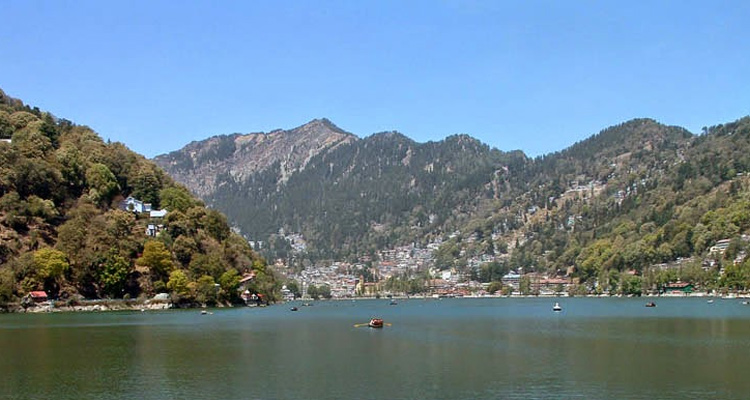
The erstwhile Jewel of Uttarakhand, Nainital Lake is regarded as the biggest lake of Kumaon region. By looking at the waters reflecting the serene beauty of the skies, it seems why Nainital is known as the “Lake District of India”. It is sandwiched by mighty hills on all sides offering a captivating view that will be etched to your memories. The sparkling water magically plays with the lights of stars at night time, which truly adds to its endless appeal. You can have a great time here boating, yachting and paddling.


Snow View Point
There is no better place than Snow View Point to capture the captivating views of the majestic Himalayan ranges. Huge numbers of tourists flock here to witness the serene beauty of snow-capped mountains like Trishul, Nanda Knot and Nanda Devi that can bewitch your soul and mind. You can easily get here by road, trek, ropeway, and pony.


Pangot and Kilbury Bird Sanctuary
Located in the tranquil village of Sigri and Pangot, the well-regarded Pangot and Kilbury Bird Sanctuary are truly blessed with natural beauty. It is covered by dense greens. Be sure to visit this place early in the morning and take full day to get around. It is truly a paradise for bird watchers, trekkers, nature photographers and foodies. 

Contact For All India Birding Tours and Birding in Pangot
E: info@asianadventures.in 
M: +91 8010450000
Don’t miss joining our ‘conservation-travel’ community! Click Here