Thursday, 28 March 2019

5 best birding hotspots of the North India


India’s vast geographical range is home to a large variety of resident birds, with the number soaring manifold with the arrival of the migratory birds in winter. Besides, the national parks and sanctuaries, there are innumerable places to go birding in India. Here is a list of five best destinations in north India that you must see.

Pangot
Located in the Indian state of Uttarakhand, Pangot is a bird watcher’s paradise and for obvious reasons. Covered with Oak and Pine trees which serve as perfect roosting spots and interspersed with gurgling brooks, Pangot attracts a plethora of bird species from all parts of the Northern peninsula. Trekking through its alluring nature trails, you can get close to the birds and take that perfect shot. Catch a glimpse of the Pheasants and Flycatchers, Barbets and Magpies, Laughingthrush and many other birds foraging for food and going about their daily chores, oblivious to your presence. During winters, the bird population explodes with flocks of migratory birds landing in Pangot in search of food and shelter. From Pangot, you can also take a quick excursion to the Corbett National Park to look for the Royal Bengal Tigers. The park also boasts of hosting over 600 species of resident and migratory birds which make it worth your time. Easily accessible from Delhi via bus, train or private vehicles, Pangot is a must visit destination if birding is your passion. 


Sattal
Named after the cluster of seven freshwater lakes that surround this little piece Eden, Sattal is another sought after birding hotspot by serious birders. The picturesque lakes of Sattal host a large number of bird species including the Brown-fronted Woodpecker, Stripe-breasted Woodpecker, Rufous-bellied Woodpecker, Mistle Thrush, Accentors, Upland Pipit, Mountain Bulbul, Whiskered Yuhina, Verditer Flycatcher and the rare Siberian Rubythroat. Home to many resident and migratory birds, Sattal is a delightful place to observe the birds at close quarters. You can take a train from Delhi to Kathgodam and cover the remaining 9 kms via a taxi or drive up there as the roads are pretty decent and motorable.


Bharatpur
Step into the unique avian world of Bharatpur Bird Sanctuary, also known as Keoladeo National Park for an unforgettable experience of birding in wetlands. Sprawling over an area of 29 square kilometres, the park comprises of varying types of microhabitats having trees, mounds, dykes and open water which harbour a plethora of bird species. Birds like Imperial, White-tailed and Spotted Eagle, Darter, Black-necked, Painted and Asian Openbill Stork, Common, Sarus and Demoiselle Crane, Black Bittern, Greater Painted Snipe, Large-tailed, Indian and Grey Nightjar, and Dusky Eagle Owl are a few among the myriad of species that the park hosts.


Chambal
Take a boat, float down the still waters of Chambal river and get up close to the large variety of avifauna the Chambal valley harbours. Our navigator will take you close to the bird colonies that can be seen atop the trees on the bank side or among the smaller islands and identify the different birds such as Indian Skimmer, Black-bellied Tern, Greater Thick Knee, Sarus and Demoiselle Crane, and flocks of migratory waterfowl. You may also catch a glimpse of the Gharials (fish-eating crocodiles) and Gangetic Dolphins that live in the river. You may also explore the ravines of Chambal valley on a Camel Safari and take an excursion to the Ater Fort. You can make your stay at Mela Kothi, a heritage bungalow now converted into a luxury lodge.


Ranthambhore
By virtue of its diverse terrain and abundance of water bodies, Ranthambore hosts large populations of resident and migratory birds. In total, 272 species of birds have been identified in the park which make it a popular birding hotspot. Ranthambore Fort, located inside the park happens to be an excellent location for spotting and photographing birds. Birds like White-naped Woodpecker, Sirkeer Malkoha, Painted Sandgrouse, Sulphur-bellied Warbler, and Indian Vulture are among the major sought after birds in this park. Visiting Ranthambore has twofold benefits - not only do you get to tick off a large number of target species from your checklist but you can also have a rendezvous with the Royal Bengal Tigers that prowl about in the park.


Phone: +918010450000
Email: info@asianadventures.in
https://linktr.ee/aatoursandlodges

Saturday, 2 February 2019

Wild Tale from the untamed land of Chambal!


The beautiful congregation of Kingfisher was present to welcome our visit in the untamed land of Chambal


As we moved further, we saw many giant rocks  transformed into the humble an abode of the endangered Red-crowned roofed turtle


The adorable sight of the two Bar-headed geese on the banks of Chambal river made our birding trip even more delightful.


The family time of the three Red-crowned roofed turtles is something very rare to spot, but we were lucky to photograph them in their happy state.


As we moved further it appeared as if the river is divided into two turf, one was ruled by the Ghariyals and the other one was ruled by the Mugger


Chambal is a perfect destination for those who want to see the unique world of wilderness sprouting around one of India’s oldest river.


Phone: +918010450000
Email: info@asianadventures.in
https://linktr.ee/aatoursandlodges

Friday, 1 February 2019

Unique Andamans


Are you looking to challenge experiences from past journeys? Or are you a travel novice? Wanting to try out the new and the never dared?
Adventure @Andamans Islands for a wonderful experience.


 Thrilling Diving Experience
Our deep sea underwater programme ‘Intro to Scuba” will give you maximum high. Turtles, sting rays, black-tipped shark and the gyrating barracudas swim past you. The butterfly fish, clown fish and colorful nudibranchs flap alongside. A spectacular reef of coral every time you turn around.


Tropical forests and Mangroves
The spectacular Andaman tropical forests have grown uninterrupted for decades.  Most of the species found in these forests are endemic.  Flanked by mangroves-salt tolerant forests, these are an expanse of sheer beauty.


Snow white Beaches and Azure Waters
The amazing islands boast of beaches which are pristine in their beauty, its waters are clear cobalt blue.

History Captured
The Cellular Jail or the famous Kala Pani stands testimony to India’s Freedom struggle


 On the First World Map
Andamans is on the first World map by Ptolemy. He called the islands
‘The islands of good fortune’.


 Unique Tribal Culture
The native aborigines have survived by resisting any culture alien to the way they have lived for generations. Onge, Sentinelese, Jarawa and Andamanese of Negroid descent stand proudly adamant on their way of living. The Shompen and Nicobarese of Mongoloid descent too retain many of their original ways.


Birding in the Andamans
Amazing endemic and migratory species make birding a pleasure. You will be able to spot birds that are not found anywhere else. A truly unique experience.


Yoga on the Beach
Revive that tired body and flagging spirit with ancient asans on the stunning primal beaches of the Andamans.


Phone: +918010450000
Email: info@asianadventures.in
https://linktr.ee/aatoursandlodges

Thursday, 31 January 2019

Nanda Devi Base Camp Trek


My love for mountains began at a very young age. Coming from an army background, I always got the luxury to travel across India. From living in the dense forest of Chattisgarh to coastal regions of South India. I had gathered several unique experiences of living in the different landscapes, sometimes being subjected to the wrath of the weather and on others drowning in its pleasures.


My fascination for the mountains began when my father got transferred to the Pithoragarh region of Uttarakhand. Being new to the region and filled with the zest to travel tempted me to explore nearby hill stations. We were on our way to Munsiyari when I got the pleasure to sight the radiant peaks of Nanda Devi. Although it was from a distance, I could see how the sun rays were caressing the peaks. While gazing at the mountains for quite some time, I saw the magical transition of golden to tangerine shades appearing on the peaks. It has been seven years since the incident took place but the episode is still fresh in my mind.


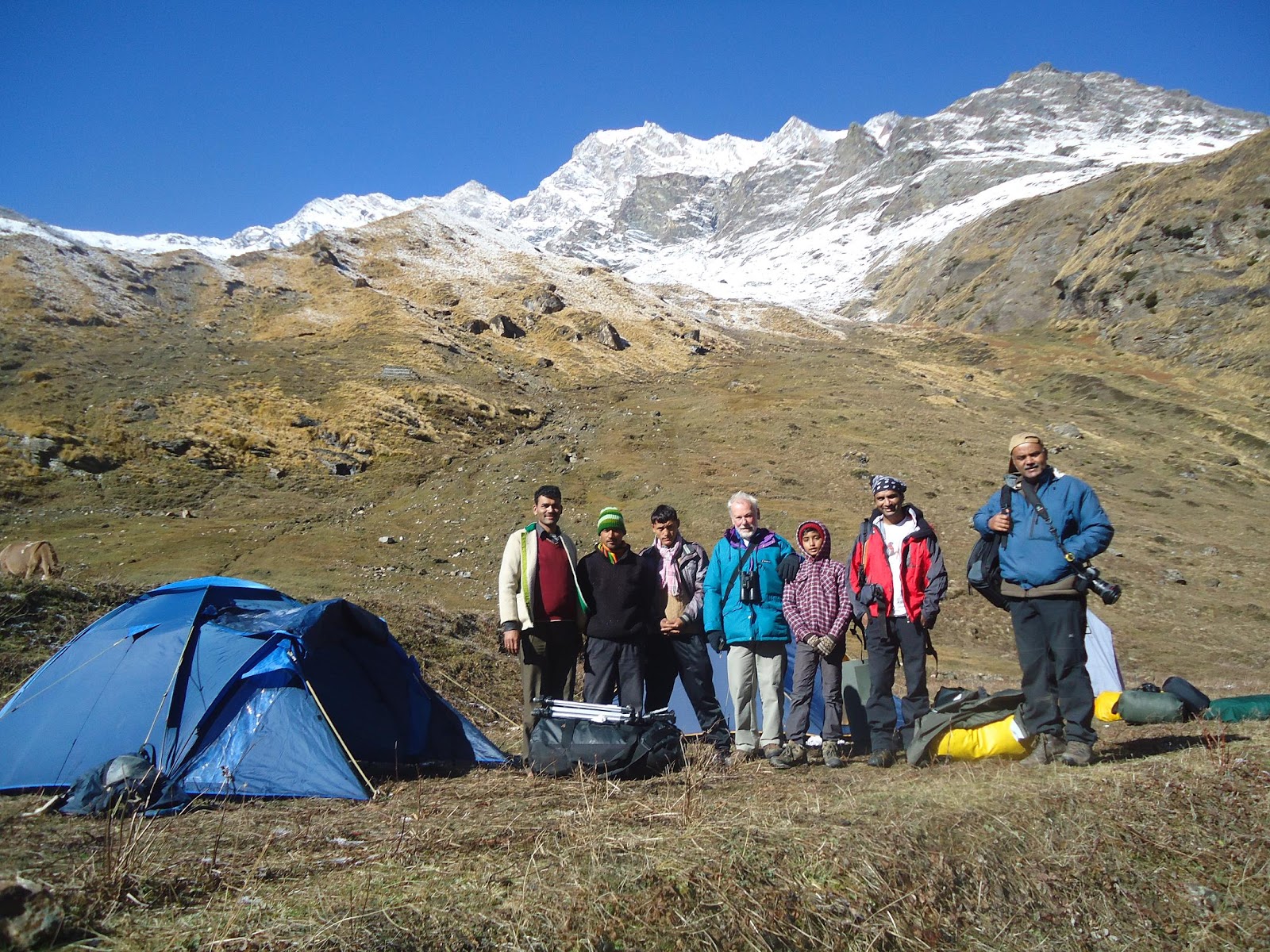
One day, when I saw the advertisement of Asian Adventures conducting Nanda Devi Basecamp Trek, I immediately registered myself for the tour. It was in the mid of October my family was preparing for Durga Puja celebrations and I was preparing for my Uttarakhand expedition. I boarded a train to Kathgodham station where all my fellow travelers were present. The representative of the trekking company escorted us to Ranikhet for the night stay. Next day early in the morning we headed to Munsiyari, A place which is also famous by the name 'Little Kashmir', it is also a starting point to initiate the Nanda Devi Trek. We were given one day to acclimatize with the local surrounding.


Next day after having breakfast, we drove six kilometers to Chilam Dhar from where the real journey began. Our target was to reach Lilam village which was seven kilometers away from our current location. We started trekking at 0900 hrs and reached the village at 1700 hrs. We walked in a straight path at first that gradually curved into a steep descent till Jimighat followed by a steady three hours walk in the upward direction before we entered the valley of Lilam, our campsite for the night. Next morning, we started our trek at 1000 hrs, walking upward along the gorge of Gori Ganga before we reached Naina Singh Top. We stopped there for a while and then began descending to Bugdyar our campsite for the night. By this time we had already entered the high mountain zone where the tree line disappears and the alpine pastures become accessible. With every passing day, we were approaching closer to the magnificent mountains.


From Bugdyar to Rilkot and from Rilkot to Ganghar village after completing 21 km in 2 days we reached Pachu village where the massive Nanda Devi was looming in front of us. For the first time, I could see these majestic mountains in such proximity. We spent the whole of next day in front of this magnificent location before descending back to our base camp.


Phone: +918010450000
Email: info@asianadventures.in
https://linktr.ee/aatoursandlodges

Tuesday, 22 January 2019

A trip to remember!


This long weekend we chose to explore Jageshwar, an ancient village of Uttarakhand hidden in the dense forest of deodar trees. By night we reached our lodge Van Serai.


2. Next morning we strolled around this unique retreat that is inspired from the charming local Kumaoni architecture


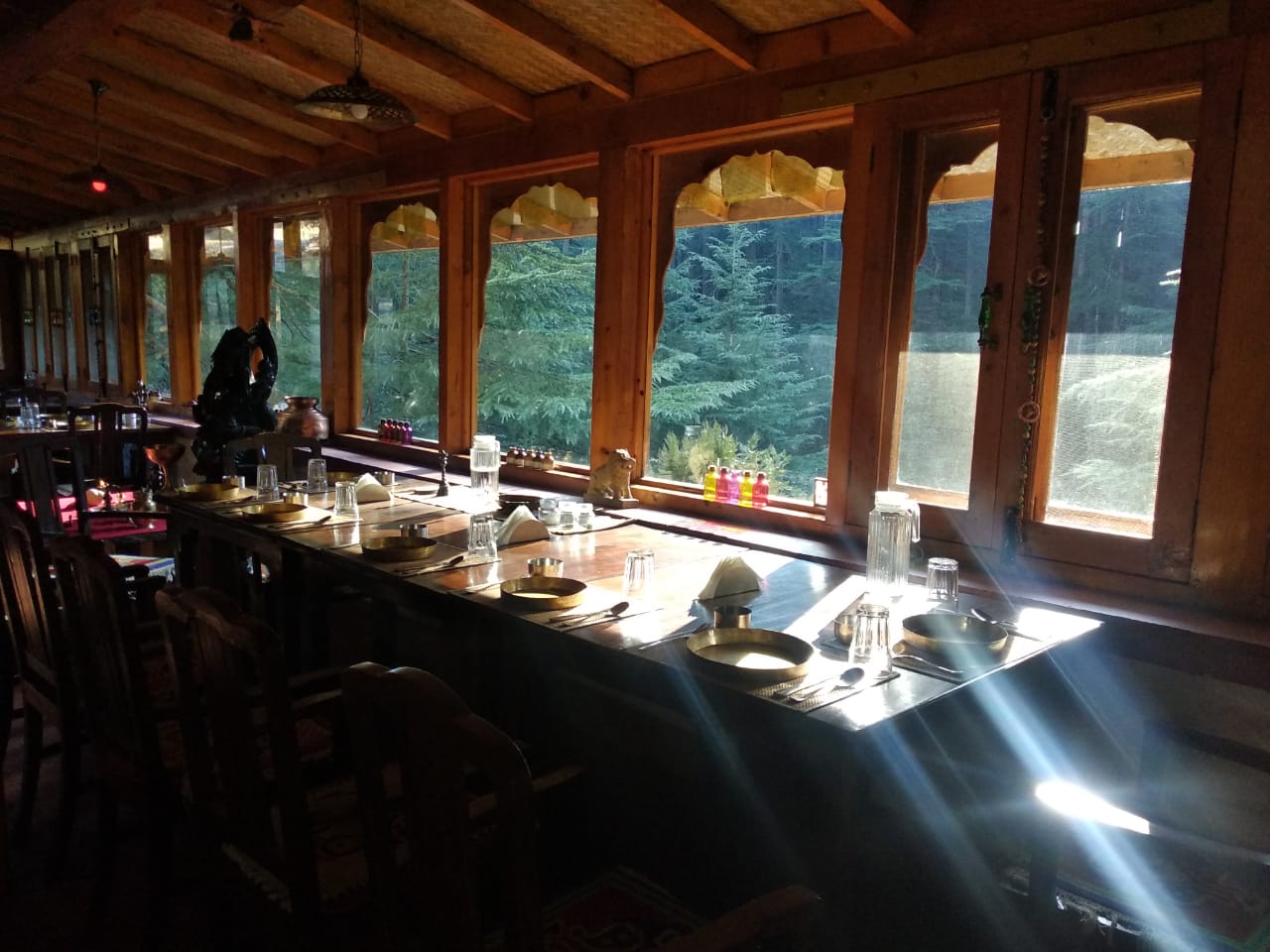
3. Through the large veranda, we could look deep inside the untamed forest of deodar trees which has become a humble abode for birds like Red-billed blue magpies & Verditer flycatcher.


4. Cafe Swayambhu is a little heaven for those who want to enjoy the mouthwatering cuisine of Kumaon


5. The scenic beauty of the tall groves and the clear blue sky commands for a perfect shot!


6. Surprisingly the lodge has already arranged for the trekking sticks so that we could explore the beautiful vistas of the Himalayas


7. The adventurous excursion to Vriddh Jageshwar along with our travel mates have carved permanent memory in our mind


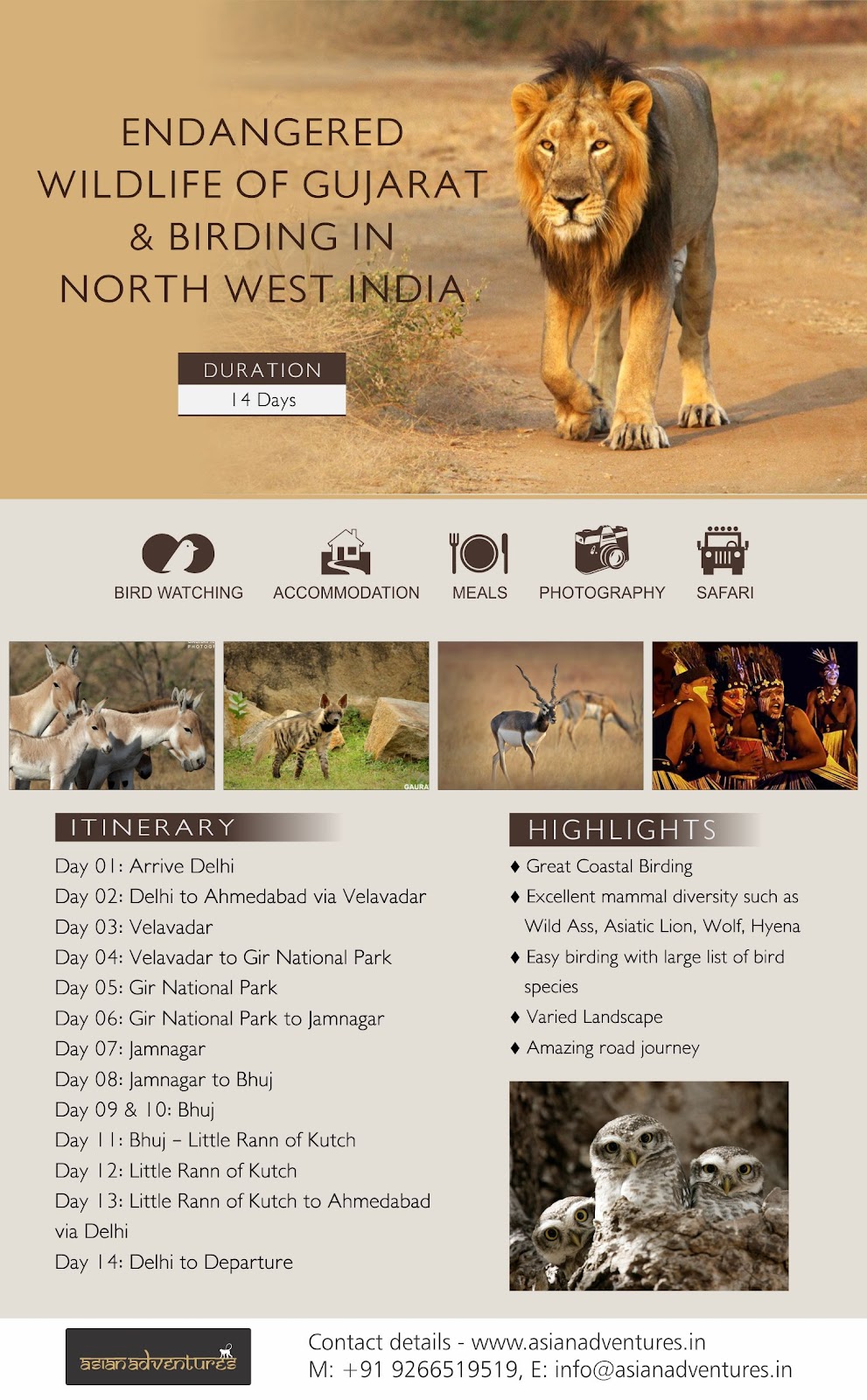
Birding Update Gujarat 2019


Hello Team!  Great Birding sightings happening Exclaimed Shyam our Naturalist as he returned from Morning Birding at the Little Rann of Kutch and was preparing to their next birding destination Heading to Great Rann of Kutch now. Shyam is  with the Ashley Howe Group Travelling with Asian Adventures on Birding watching and Wildlife Tour of Northern and  Western India

This Birding Group of 6 visiting India  will have covered Delhi, Sultanpur Bird Sanctuary, National Chambal, Sanctuary, Tal Chapper, Bikaner, Kheechan, Desert National Park, Abu Road, Mount Abu, Little, Rann of Kutch, Great Rann of Kutch, Gir National Park,Mumbai and  Tansa Wildlife Sanctuary near Mumbai by the end of their India Birding Tour

While our Naturalist Continues with his group we will wait for the update for sightings
Today mornings Highlights are
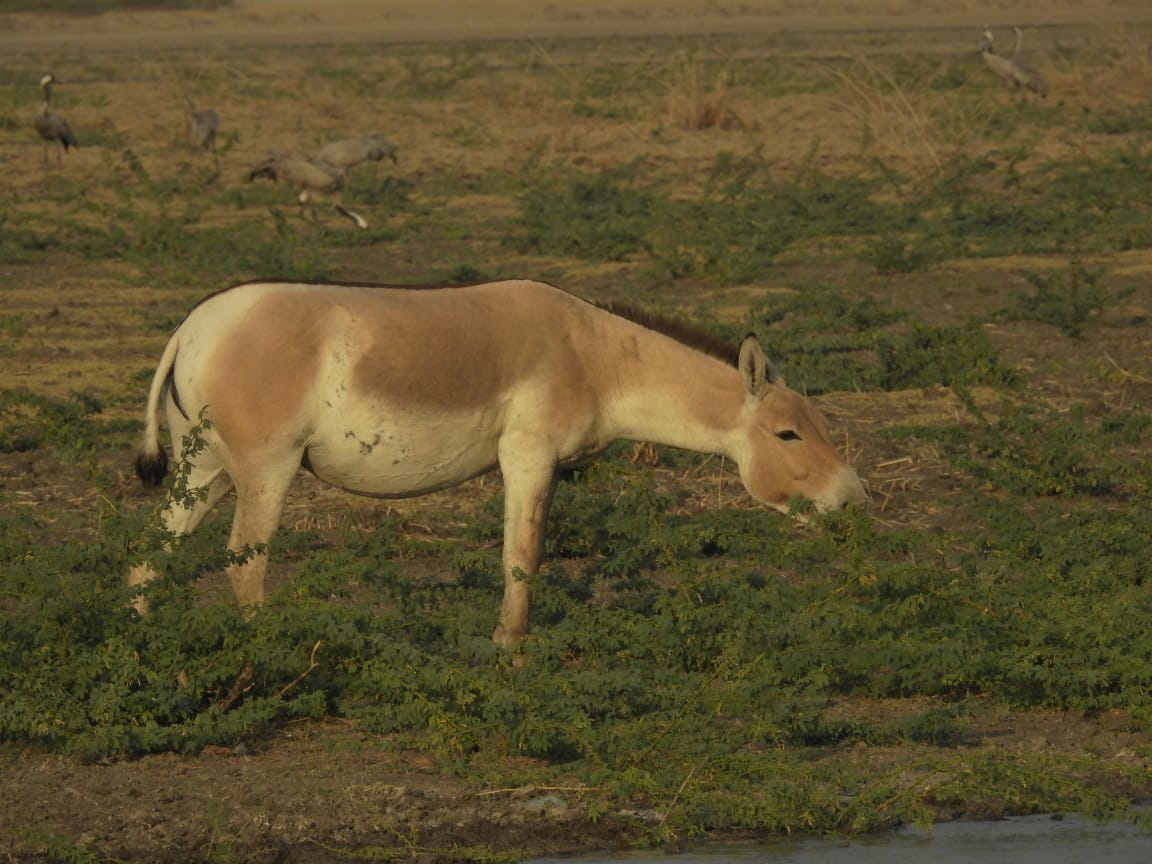
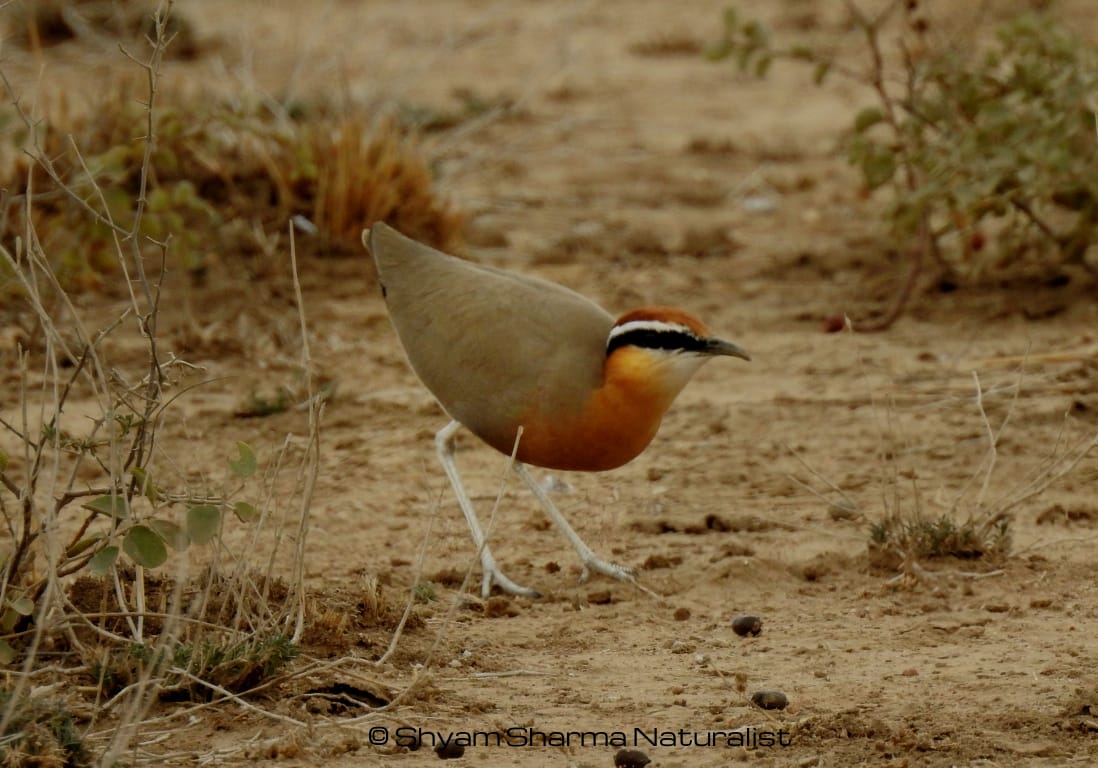
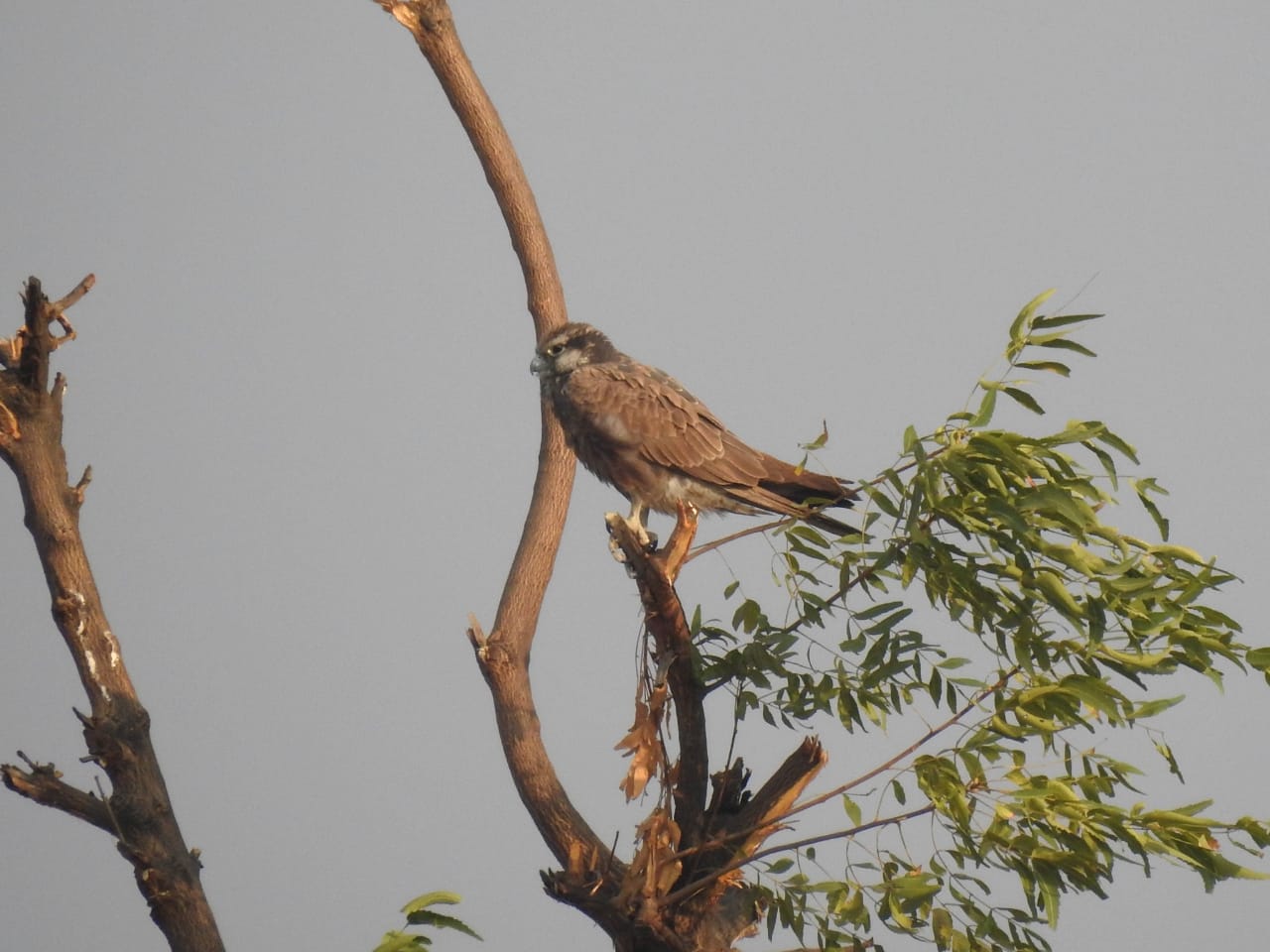
the Sociable Plover or Lapwing(critically endangered species), Indian Courser, Saker and Red-necked Falcon, White-eyed Buzzard, Sykes's Nightjar, Red-headed Bunting, Orphean and Sykes's warbler and many common birds. Mammals- Indian Wild Ass, Jungle Cat, Desert Cat, Indian Fox, Indian Grey Mongoose and Nilgai Etc.


Post birding at The greater Rann of Kutch the Group will head to The Gir National Park at Sasan Gir, in Gujarat India. The Gir Birding Lodge will be hosting the where Lion Safari will be an experience they must look forward to.

The Gir Birding Lodge

 A Birding lodge located near the boundary of Sasan Gir Park - The spreading wilderness where the magnificent Asiatic lion roams in regal splendour. The Gir Birding Lodge is a  Wildlife Speciality Lodge in the middle of mango orchards, ideal for Photographers, Birders and Wildlife enthusiasts visiting Gir.

If you are interested in a Wildlife and Birding Tour of Gujarat - Asian Adventures are the Experts in Wildlife and Birding Tours in the region. Operating since 1994


Tuesday, 11 December 2018

Lions aren’t the only denizens of Gir, it’s these tribes too!

Located in the Indian state of Gujarat, Gir National Park stands as the last bastion for the majestic Asiatic Lions. Once facing extinction and numbering only fifteen, the population of the Asiatic Lions has risen slowly over the years to five hundred and twenty-three thanks to the conservation efforts by the forest department and the local tribes who live in harmony with these big cats. There are two main tribes that dwell in and around Gir National Park, and whenever you visit the park you must make it a point to visit these tribes as well to experience their unique culture. It will reaffirm your faith in the fact that sustainable living isn’t just a far-fetched concept but a possibility. Let us shed a little light on them.


Maldharis
Maldharis are one of the oldest tribes of Gujarat and have been living in the Gir Forest for over a thousand years. Herders by profession, their tolerance towards the Lions is one of the major reasons the Lions have been flourishing in Gir. They are the perfect example of how it is possible for humans to coexist with nature. The Maldharis do not view Lions as a threat but as brethren and the losses that they incur, they believe it is their offering to the Lions for sharing their habitat with them. Such an ideology can be instrumental in conserving the precious wildlife of our country, and such a value system can only be found in India. Such an interesting community is worth studying which is why we organize excursions to the Maldhari villages to meet and greet these ‘Lion People’. Besides being torchbearers for conservation, Maldharis also possess excellent culinary skills. ‘Maldhari Thali’ is something you must try if you ever visit Gujarat.


Siddhis
Inhabiting the areas surrounding the Gir Forest National Park, Siddhis are a native African tribe which were brought to the Western Coast over three hundred years ago and have been living there ever since. Though they have adopted the regional language and customs, they still practice some of their original traditions, Dhamaal dance being one of them. Some lodges near the park organize these dance performances, Gir birding lodge being one of them. Many of the tribesmen have now become forest rangers and guides and have taken on the mantle for the conservation of the unique wildlife of Gir National Park.